SPC Flooring Installation Guide for Hotels & Contractors
Renovating a hotel in the USA is becoming increasingly time-sensitive, dealing with active guests, tight occupancy windows and contractor schedules that are leaving very little room for slow installation processes. Traditional flooring methods are often taking weeks per floor and are creating downtime that hotel operators simply cannot afford. To tackle this challenge, modern hotels and commercial contractors are now switching to SPC flooring installation that is reliable, fast and easier to manage across phased renovations. This guide is built for hotel owners, GMs and contractors planning a 2026 renovation of hotel and it is covering every step of the process, let's take a look.
What is Click-Lock SPC Flooring Installation?
Click-lock SPC flooring installation is the floating-floor method that is allowing rigid SPC planks to lock together mechanically without glue, nails or adhesives. This is the dominant install method for hotel renovation flooring projects across the USA today because it is fast, clean and reversible across both new builds and refurbishments.
How Click-Lock Systems Work
The click-lock flooring system is using a precision-milled tongue-and-groove profile on each plank edge that is snapping together at an angle and then locking flat under tension. Most leading SPC brands are using 5G, Unilin or Välinge click systems engineered for commercial loads. The planks are floating on top of the subfloor, expanding and contracting as needed without adhesive restriction. This is making the floor stable across temperature swings while keeping installation time dramatically lower than glue-down methods.
Why Click-Lock SPC Flooring Installation Preferred for Commercial Projects
For hotels and large commercial flooring installation projects across the USA, click-lock SPC is preferred because it is allowing rapid room-by-room install with zero adhesive cure time. Crews are walking back into the room the same day, furniture is going back immediately and the property is opening rooms back to revenue faster than any other flooring system. This also is helping contractors complete multi-floor hotels in phased schedules without taking the entire property offline.
Step-by-Step SPC Flooring Installation Process
Knowing how to install SPC flooring correctly is extremely crucial for long-term performance across high-traffic hotel environments. The five-step process below is the workflow professional installers across the USA are following for every hospitality project.
Step 1: Site Preparation & Subfloor Requirements
The subfloor is checked for flatness within 3/16" over 10 feet, since uneven subfloors are causing plank flex, click failure and squeaking over time. All debris, adhesive residue, nails and existing transition strips are removed. Moisture testing is performed on concrete subfloors, readings should stay under 75% relative humidity for safe installation. Any cracks or low spots are levelled with a self-levelling compound 24 to 48 hours before installation is starting.
Step 2: Acclimation & Material Handling
SPC planks are delivered 48 hours before installation and acclimated inside the install space at the same temperature and humidity the floor is going to live in. Boxes are stored flat, never on edge, to prevent plank warping. Hotel HVAC must be running at normal operating conditions during this period. Skipping acclimation is the most common reason planks are gapping or peaking in the first 90 days post-install.
Step 3: Plank Layout Planning
Plank direction is planned along the longest wall of the room or along the natural light source to maximise the visual length of the space. End joints are staggered by at least 8 inches between adjacent rows to maintain structural integrity and aesthetic flow. Expansion gaps of 1/4" to 3/8" are marked around all walls, columns, doorways and fixed cabinetry. Cuts are dry-laid first to confirm the layout before any clicking is happening.
Step 4: Click-Lock Installation Method
The first row is laid with the tongue side facing the wall, using spacers to maintain the expansion gap. Each new plank is inserted at a 20 to 30 degree angle into the previous plank's groove, then gently lowered until the click engagement is felt and heard. End joints are tapped with a tapping block to fully close any micro-gaps. Row by row, the install is progressing across the room without any adhesive. A standard hotel room of 250 to 350 sq ft is typically completing in 2 to 3 hours per professional installer.
Step 5: Finishing & Edge Detailing
Once the field is installed, all spacers are removed and the expansion gaps are covered with quarter round, baseboard or matching transition strips. Transition mouldings are installed at doorways, between flooring materials and at expansion joints required for runs over 30 feet. Silicone caulking is applied at wet-area transitions like bathroom entries. A final walkthrough is performed checking for clicks, gaps and surface defects before the room is being handed back to operations.
Benefits of Fast SPC Flooring Installation
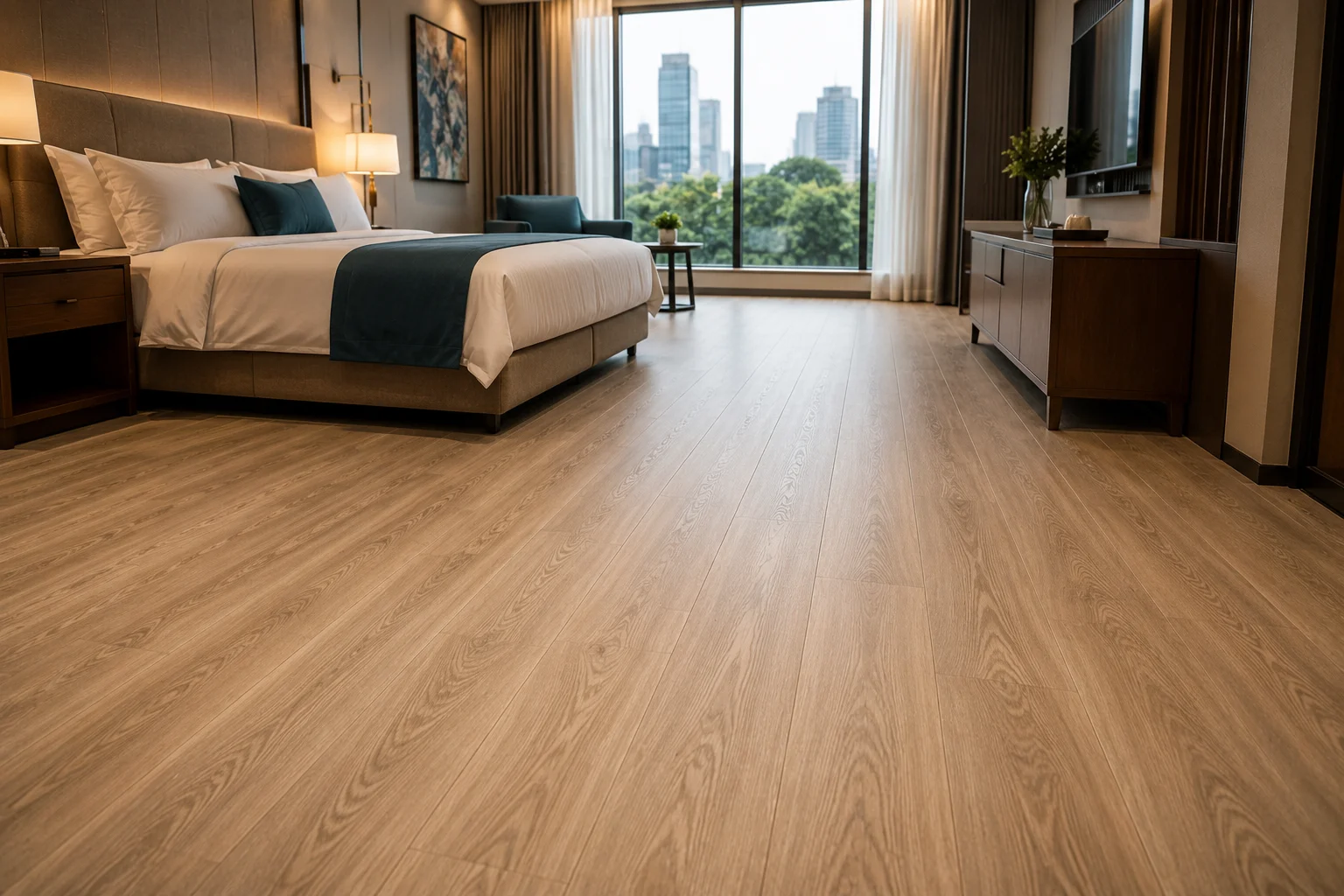
Fast SPC flooring installation is delivering measurable business benefits for hotels and commercial operators across the USA. The benefits are compounding across the renovation lifecycle, from reduced downtime to faster ROI on the floor itself.
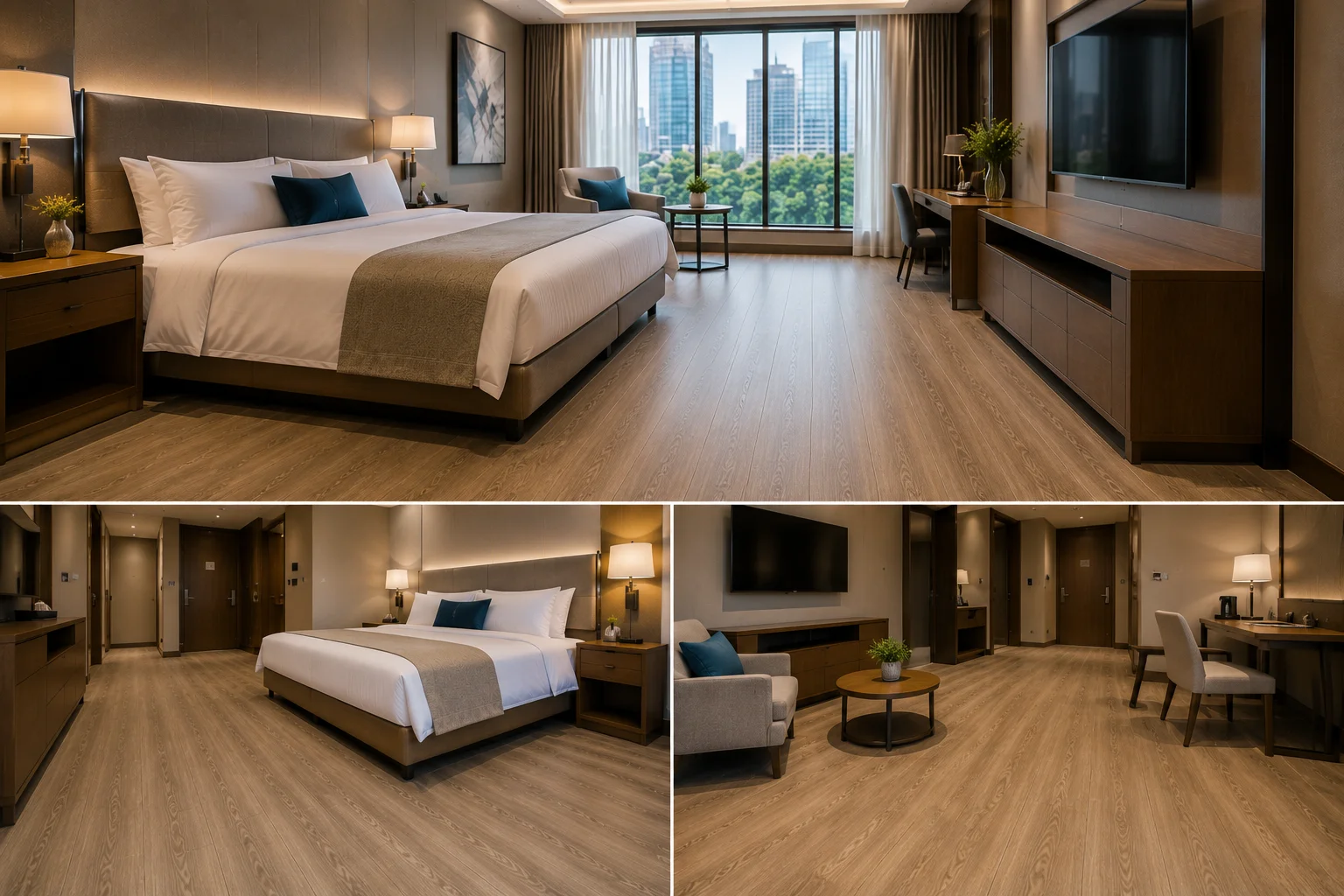
- Rooms are returning to revenue 60 to 70% faster than carpet or hardwood replacement cycles.
- No adhesive cure time is meaning furniture and fixtures are going back the same day.
- Phased floor-by-floor installation is keeping the property partially operational throughout the renovation.
- Lower labour cost per square foot compared to glue-down or nail-down traditional methods.
- Cleaner job site with no adhesive fumes, glue spills or extended ventilation requirements.
- Reduced disruption to neighbouring rooms because of dramatically lower noise during install.
For hotel renovation flooring programs that are managing dozens of rooms across multiple floors, these benefits are translating directly into faster project delivery and protected revenue cycles across the property.
Common Installation Mistakes to Avoid
Even with click-lock systems, SPC flooring installation can go wrong when crews are cutting corners or skipping critical preparation steps. The mistakes below are the most common causes of post-install failures across hotel projects in the USA.
- Skipping acclimation : installing planks straight off the truck is leading to gapping, peaking and seam separation within weeks.
- Inadequate subfloor preparation : uneven subfloors are causing plank flex, lippage and click failure over time across high-traffic areas.
- Missing the expansion gap : no expansion gap is causing planks to buckle when the floor naturally expands under temperature changes.
- Wrong direction of install : laying planks against the longest wall or away from natural light is making the room look smaller and cramped.
- Forcing the click joint : hammering instead of using a tapping block is damaging the click mechanism and is creating weak joints that fail.
- Ignoring moisture readings : installing over high-moisture concrete without a moisture barrier is causing long-term plank movement and core failure.
- Mixing batches without blending : not blending planks from different cartons is creating visible colour and pattern banding across the room.
Avoiding these mistakes is exactly what is separating a 20-year hotel floor from one that is failing within 24 to 36 months of opening.
SPC Flooring Installation Cost Breakdown
For most hotel and commercial projects across the USA, the all-in SPC flooring cost is ranging between $4 and $8 per square foot installed. Material is typically $2.50 to $5.50 per sq ft, while installation labour is adding $1.50 to $3 per sq ft depending on project size, region and complexity.
- Material cost (commercial-grade SPC) : $2.50 to $5.50 per sq ft.
- Installation labour : $1.50 to $3 per sq ft for click-lock floating install.
- Subfloor preparation and levelling : $0.50 to $2 per sq ft if required across the space.
- Removal of existing flooring : $1 to $3 per sq ft depending on what is being removed.
- Transitions, mouldings and trim : $50 to $150 per room average.
- Project management and supervision : 8 to 12% of total project cost on large jobs.
For a typical 100-room mid-scale hotel renovation in the USA, the total SPC flooring cost is generally falling in the $80,000 to $250,000 range depending on room size, finish level and scope of subfloor work required across the property.
SPC vs Glue-Down vs Traditional Installation
Hotel operators and contractors are often comparing SPC click-lock installation against glue-down vinyl and traditional carpet or hardwood install methods. The table below is making the comparison quick and clear across the metrics that are mattering most for commercial flooring installation projects.
|
Feature |
SPC Click-Lock |
Glue-Down LVT |
Carpet |
Hardwood |
|
Install speed |
Fastest (1 day per room) |
Medium (with cure time) |
Fast |
Slowest |
|
Adhesive required |
None |
Full spread adhesive |
Tack strips + adhesive |
Nails or glue |
|
Cure / dry time |
None |
24–72 hours |
Minimal |
24 hours |
|
Subfloor flatness needed |
Moderate |
Very high |
Low |
Very high |
|
Reusability of planks |
Yes |
No |
No |
Limited |
|
Best for |
Hotels, retail, F&B |
High-traffic public spaces |
Guest rooms (older spec) |
Premium suites |
|
Typical install cost |
$1.50–$3/sq ft |
$2.50–$5/sq ft |
$2–$4/sq ft |
$4–$10/sq ft |
|
Downtime impact |
Minimal |
Moderate |
Low |
High |
For most hotel renovation flooring programs across the USA, SPC click-lock installation is winning on speed, cost and operational disruption, which is exactly why it is becoming the default specification across mid-scale and upscale hotel projects in 2026.
How to Choose the Right Installation Partner
Choosing the right installation partner is just as important as choosing the right SPC product. The four areas below are what hotel owners and GMs should be evaluating before signing any contract with a contractor or installer in the USA.
Experience in Commercial Projects
The installer should be having a verifiable portfolio of commercial flooring installation projects, ideally hotels, multifamily or large retail. Ask for at least 3 named hotel projects completed in the last 24 months with reference contacts. Residential installers, even very experienced ones, are often unfamiliar with the phased, occupied-building workflows that hotel renovations are demanding.
Ability to Handle Large Volumes
Hotel projects are often involving 20,000 to 100,000 square feet of flooring across multiple floors. The installer should be having the crew size, staging capacity and project management bandwidth to deliver this volume on the agreed schedule. Confirm crew counts, daily output per crew and how they are handling parallel floors across the build.
Timeline & Project Coordination
The installer should be working directly with the hotel's general contractor, FF&E vendor and operations team to phase the install around occupied rooms and revenue protection. Strong communication, weekly schedule updates and a single point of accountability are extremely crucial for keeping the renovation on track and avoiding cost overruns.
Post-Installation Support
A reliable installation partner is providing post-install support including punch-list correction, plank replacement availability, warranty registration with the SPC manufacturer and access to matching material for future room additions or repairs. Without this support, even a perfect install is becoming difficult to maintain over the 15 to 25 year life of the floor.
- SOFT SEATING
- BATHROOM VANITY
- FIXTURE EQUIPMENT
- Hospitality Casegoods
- Hospitality outdoor furniture
- Senior Living Furniture
- Hotel reception desk
- High end contract furniture
- Premium Hotel Bedroom Furniture
- Custom commercial furniture
- Hospitality Furniture Manufacturers in Canada
- Leading Hotel Furniture Manufacturers in Canada
- Casegood manufacture canada
- Cultured Marble
- SPC Flooring
- Boutique Hotel Furniture
CATEGORIES





FREQUENTLY ASKED QUESTIONS

Author: Sangeeta Agarwal
RELATED BLOGS
SPC Flooring Guide for Hotels & Commercial Spaces USA 2026
Sam Agarwal | May 21, 2026
SPC vs LVT vs WPC Flooring: Which is Best for Hotels?
Sangeeta Agarwal | May 20, 2026