SPC vs LVT vs WPC Flooring: Which is Best for Hotels?
Hotel operators across the United States constantly weigh SPC vs LVT vs WPC flooring options when selecting materials for new builds and major renovations. Each category sits inside the resilient flooring family but carries distinct construction, performance and pricing characteristics that genuinely matter inside busy hospitality environments.
This article focuses strictly on the differences between the three categories rather than restating manufacturing background already covered in other industry articles. The goal is helping operators decide which flooring belongs inside guest rooms, corridors, lobbies and dining areas without paying for performance the property does not actually need.
SPC vs LVT vs WPC: Quick Overview
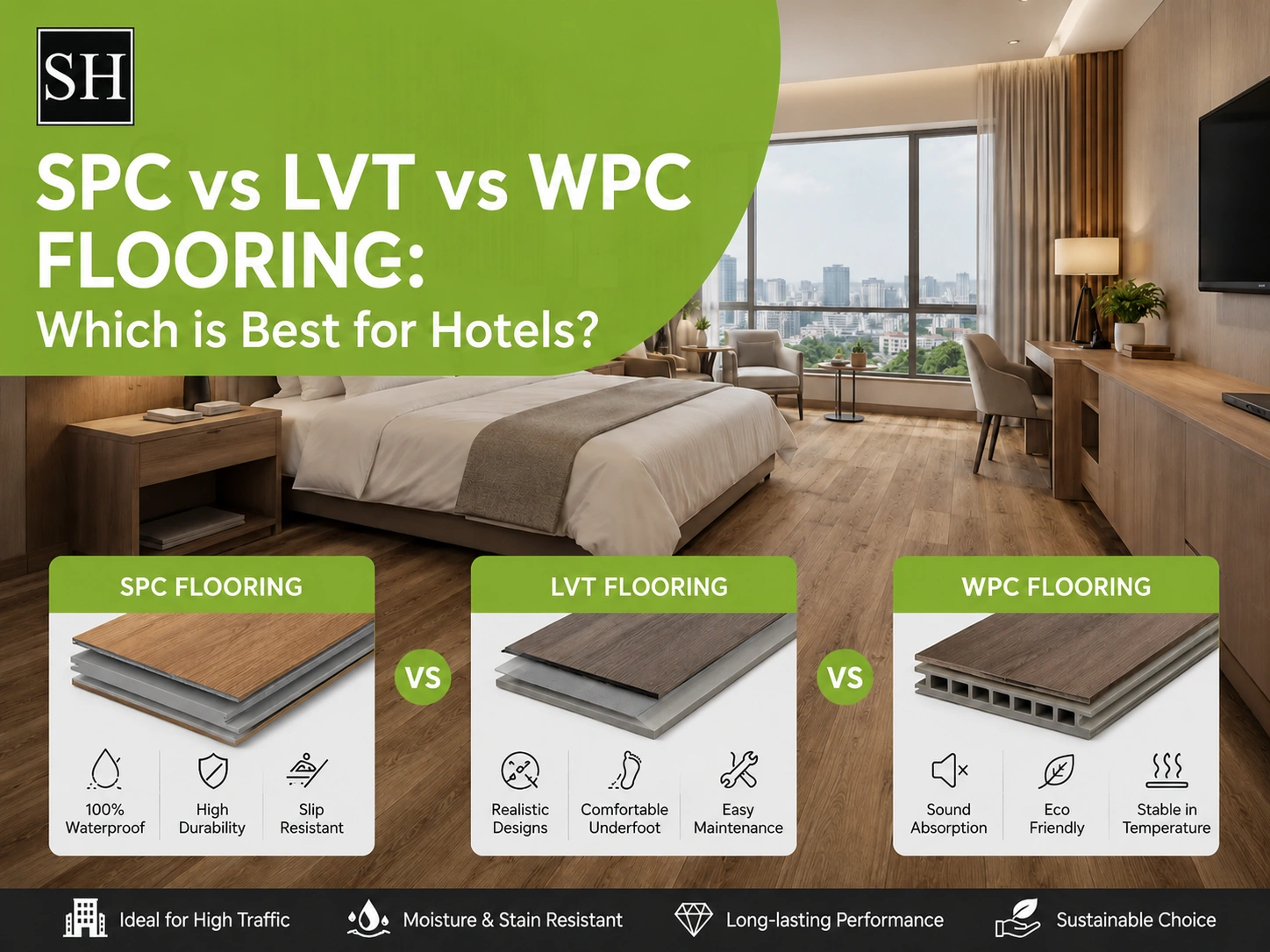
Each category serves a different operational use case inside modern American hotels and the spc vs lvt flooring debate alone has filled countless industry articles. The quick overview below explains how the three options differ at the core level before the deeper comparison table follows.
1. SPC (Rigid Core for High-Traffic Hotels) Flooring
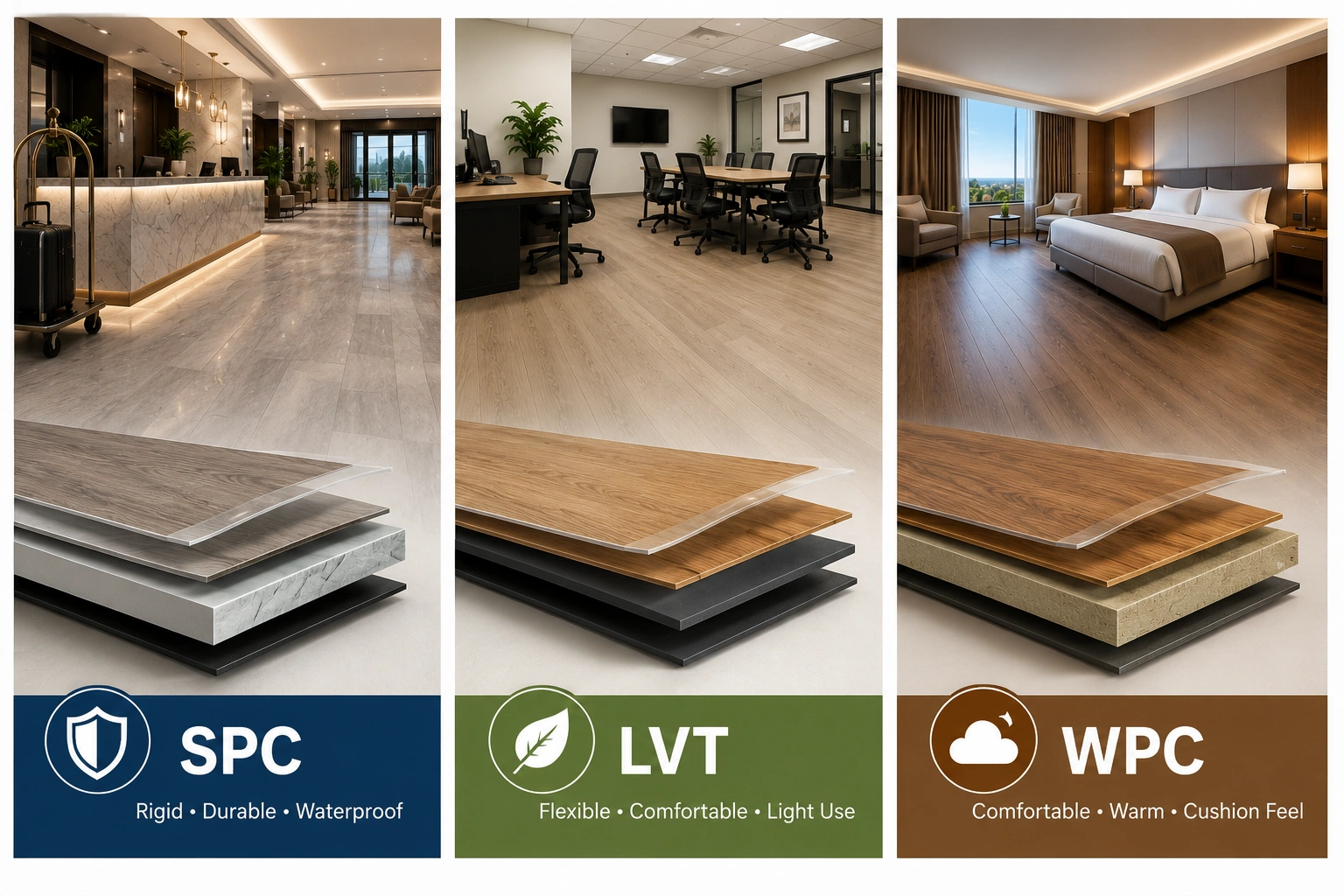
SPC flooring uses a rigid limestone-PVC core that resists denting from heavy luggage, rolling carts and concentrated foot traffic across busy hospitality zones. The rigid core stays dimensionally stable under temperature swings and survives full water exposure without warping or swelling over many operating years. Hotel chains across the United States have shifted toward SPC for guest rooms, corridors and lobbies because the combination of durability and water resistance fits the operational reality directly.
2. LVT Flooring (Flexible Vinyl for Light Commercial Use)
LVT flooring uses a softer and more flexible vinyl construction that delivers comfortable underfoot feel but lacks the dimensional rigidity of SPC products. The flexible core makes LVT vulnerable to telegraphing subfloor imperfections through to the surface across years of constant rolling load exposure inside hotels. Most operators reserve LVT for back-of-house offices, employee break rooms and lighter commercial zones where heavy traffic and frequent water exposure stay minimal.
3. WPC Flooring (Comfort-Focused Flooring Option)
WPC flooring uses a wood plastic composite core that delivers a softer step feel and warmer underfoot temperature than rigid SPC alternatives. The wpc vs spc flooring trade-off centers on comfort against durability, since WPC dents more easily under heavy rolling loads inside busy commercial spaces. Boutique hotels and luxury suites occasionally specify WPC inside guest rooms where comfort matters more than the brutal traffic patterns found across larger property lobbies.
Key Differences Between SPC, LVT and WPC
The differences between SPC, LVT and WPC become much clearer when buyers see the technical specifications laid out side by side. The table below compares the three categories across the metrics that matter most inside a real hotel flooring comparison decision.
|
Feature |
SPC Flooring |
LVT Flooring |
WPC Flooring |
|
Core Composition |
Limestone + PVC |
Flexible Vinyl |
Wood Plastic Composite |
|
Rigidity |
Very Rigid |
Flexible |
Semi-Rigid |
|
Water Resistance |
100% Waterproof |
Water Resistant |
100% Waterproof |
|
Dent Resistance |
Excellent |
Fair |
Good |
|
Underfoot Comfort |
Firm |
Soft |
Softest |
|
Sound Insulation |
Good |
Fair |
Excellent |
|
Subfloor Tolerance |
High |
Low |
Medium |
|
Typical Lifespan |
20 to 25 years |
10 to 15 years |
15 to 20 years |
|
Cost per sq ft |
$2.50 to $5 |
$1.50 to $4 |
$3 to $6 |
|
Best Hotel Use |
High-traffic zones |
Back of house |
Guest suites |
The rigid core vs vinyl plank distinction comes through clearly inside the table above, with SPC outperforming LVT on durability across every commercial metric that hotel operators care about.
Why SPC Flooring is the Best Choice for Hotels
SPC flooring stands out as the best flooring for hotels because the construction directly matches the operational stress patterns found inside busy American properties. The rigid core handles luggage carts, suitcase wheels and concentrated foot traffic without denting across the five busiest zones inside any property. Full waterproof construction protects the planks from bathroom splashes, dining spills and lobby weather exposure that destroy traditional alternatives within a few short years. Acoustic underlayments built into modern SPC products reduce footfall noise transmission to rooms below, which directly improves guest sleep quality and review scores.
Maintenance costs stay low because SPC cleans with standard mopping and survives commercial cleaning chemicals without dulling, fading or releasing finishes over time. Long lifespans averaging twenty to twenty-five years deliver strong return on investment for any large hospitality renovation or new construction project planned today.
Conclusion
The spc vs lvt vs wpc decision ultimately comes down to matching flooring performance against the real operational demands of the specific hotel zone. SPC flooring wins inside guest rooms, corridors, lobbies and dining areas because the rigid core and waterproof construction cover every hospitality stress condition.
LVT and WPC still have valid roles inside lighter zones such as offices, employee lounges and boutique suites where traffic stays predictable. Operators planning new properties or major renovations should specify each zone with the right flooring type rather than defaulting to one single material across the entire building.
- SOFT SEATING
- BATHROOM VANITY
- FIXTURE EQUIPMENT
- Hospitality Casegoods
- Hospitality outdoor furniture
- Senior Living Furniture
- Hotel reception desk
- High end contract furniture
- Premium Hotel Bedroom Furniture
- Custom commercial furniture
- Hospitality Furniture Manufacturers in Canada
- Leading Hotel Furniture Manufacturers in Canada
- Casegood manufacture canada
- Cultured Marble
- SPC Flooring
- Boutique Hotel Furniture
CATEGORIES




FREQUENTLY ASKED QUESTIONS

Author: Sangeeta Agarwal
RELATED BLOGS
SPC Flooring Installation Guide for Hotels & Contractors
Sangeeta Agarwal | May 26, 2026
SPC Flooring Guide for Hotels & Commercial Spaces USA 2026
Sam Agarwal | May 21, 2026