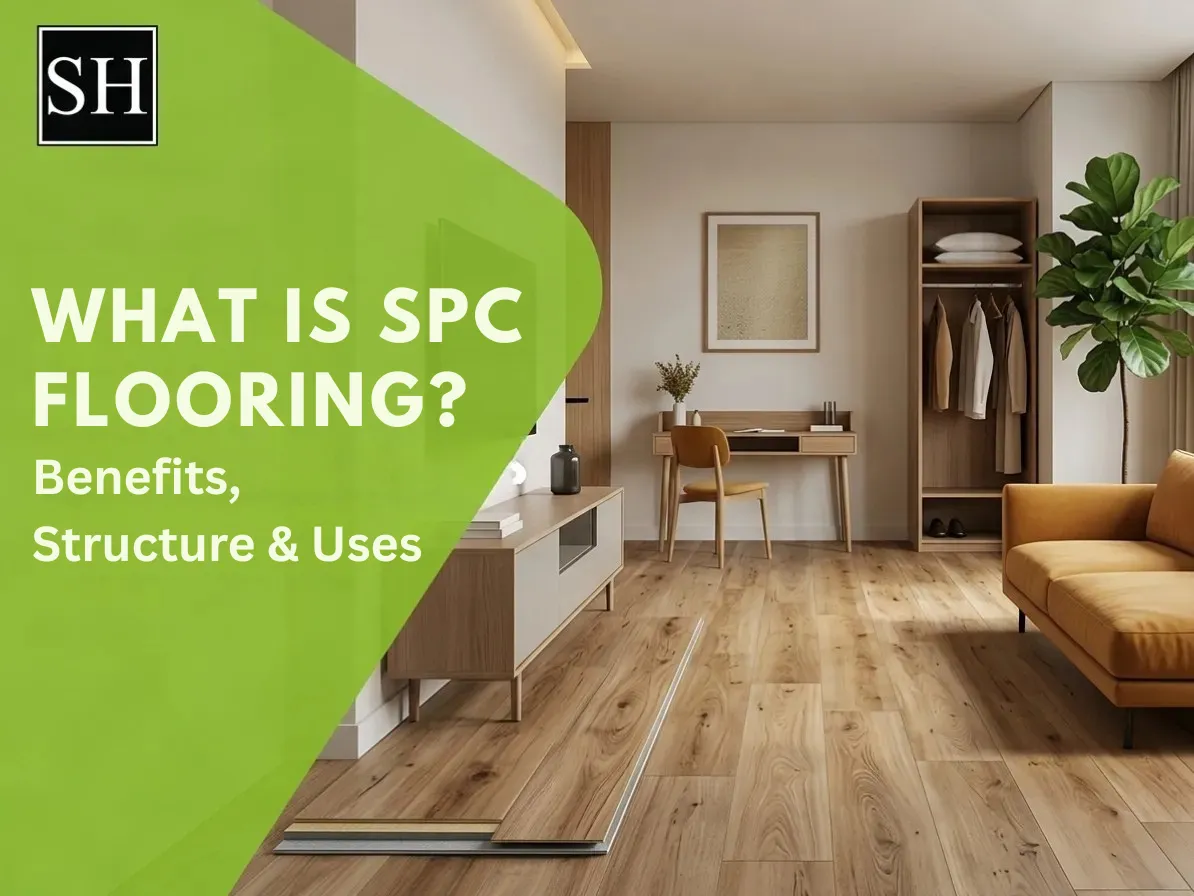
SPC flooring has emerged as one of the fastest growing categories inside both commercial and residential interiors across the United States today. Hotels, restaurants, offices and homeowners have started asking what is SPC flooring whenever durability and water resistance enter the buying conversation.
The category sits between traditional vinyl and engineered hardwood in pricing while delivering performance characteristics that frequently outpace both of those alternatives. This article walks through the definition, structure, benefits and real-world hotel applications that explain why SPC flooring keeps gaining steady market share every single year.
Definition of SPC (Stone Plastic Composite) Flooring
SPC stands for Stone Plastic Composite, which describes the rigid core blend of limestone powder, polyvinyl chloride and stabilizers used during manufacturing. The spc flooring meaning becomes clearer when buyers understand that the stone content gives the planks their characteristic stiffness, dimensional stability and impact resistance. Traditional luxury vinyl tile relies on softer cores that flex underfoot, while SPC plank construction stays rigid even when installed across slightly uneven subfloors.
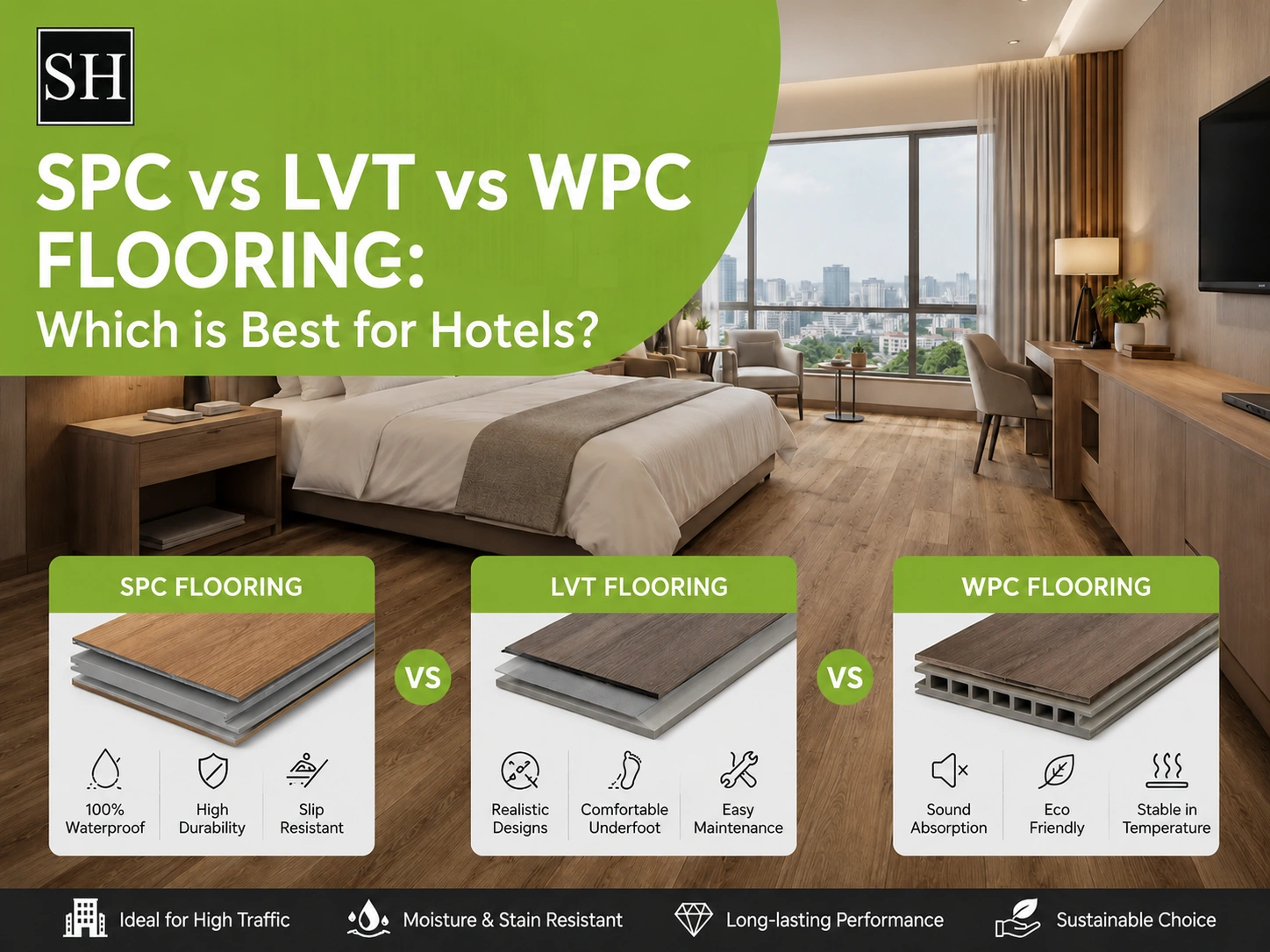
Manufacturers produce SPC flooring in plank or tile formats with attached underlayment layers that further reduce sound transmission throughout the entire room. The category fits comfortably under the broader rigid core flooring umbrella, which also includes WPC flooring built around wood plastic composite cores instead. Buyers researching what is SPC flooring will quickly notice that durability ratings frequently exceed traditional laminate by significant margins across daily use scenarios.
How SPC Differs from Traditional Flooring
Traditional flooring categories such as hardwood, laminate and standard luxury vinyl each carry distinct compromises that SPC flooring directly addresses through its hybrid construction. Solid hardwood looks beautiful but expands and contracts with humidity changes, which causes warping inside hotel rooms and other high-moisture commercial spaces.
Laminate offers affordability and visual realism but fails quickly when water reaches the fiberboard core during spills or routine mop cleaning. Standard luxury vinyl handles moisture well but tends to dent under heavy furniture or constant commercial foot traffic over the years. SPC flooring combines hundred percent waterproof construction with dent resistance that rivals porcelain tile while still providing softer underfoot comfort for occupants.
|
Flooring Type |
Water Resistance |
Durability |
Comfort |
Typical Lifespan |
|
Solid Hardwood |
Low |
High |
High |
25+ years |
|
Laminate |
Low |
Medium |
Medium |
10 to 15 years |
|
Standard LVT |
High |
Medium |
High |
10 to 20 years |
|
SPC Flooring |
Very High |
Very High |
Medium-High |
20 to 25 years |
Buyers comparing spc flooring advantages against traditional options consistently report shorter installation timelines, simpler maintenance routines and longer service life across busy environments. Maintenance teams inside the hospitality sector frequently mention how easy SPC flooring stays during the daily turnover of guest rooms.
Structure of SPC Flooring
The construction of SPC flooring follows a layered approach where each component contributes specific performance characteristics that together create the finished product. Understanding the spc flooring layers helps buyers compare products intelligently when sales representatives use technical terms during showroom visits and project specifications. Each layer below covers one essential component of any quality SPC plank manufactured by reputable suppliers today.
Wear Layer
The wear layer sits at the very top of every SPC plank and protects the entire structure from scratches and stains. Thickness is measured in mils, with 12 to 20 mils being standard for residential use and 22 to 40 mils required for commercial settings. UV coatings applied during manufacturing add another protective barrier against fading from direct sunlight exposure across many years of daily wear.
Vinyl Layer
The vinyl layer directly beneath the wear layer carries the printed visual design that creates the wood grain, stone or tile appearance. High-definition printing technology used by leading manufacturers produces realistic patterns that genuinely fool the eye across natural viewing distances inside any room.
Rigid Core (SPC Core)
The rigid core represents the structural heart of SPC flooring and combines limestone powder with PVC for true dimensional stability. This rigid core flooring layer prevents the planks from telegraphing subfloor imperfections through to the finished surface during installation across uneven concrete slabs. The core also provides the impact resistance that allows the product to handle dropped luggage, rolling suitcases and heavy furniture every single day.
Underlayment
The underlayment sits at the bottom of the plank and serves dual functions of acoustic dampening and minor subfloor leveling support. IXPE or EVA foam types remain the most common materials used across modern SPC flooring products manufactured for residential and commercial applications today.
Where SPC Flooring is Used in Hotels In USA
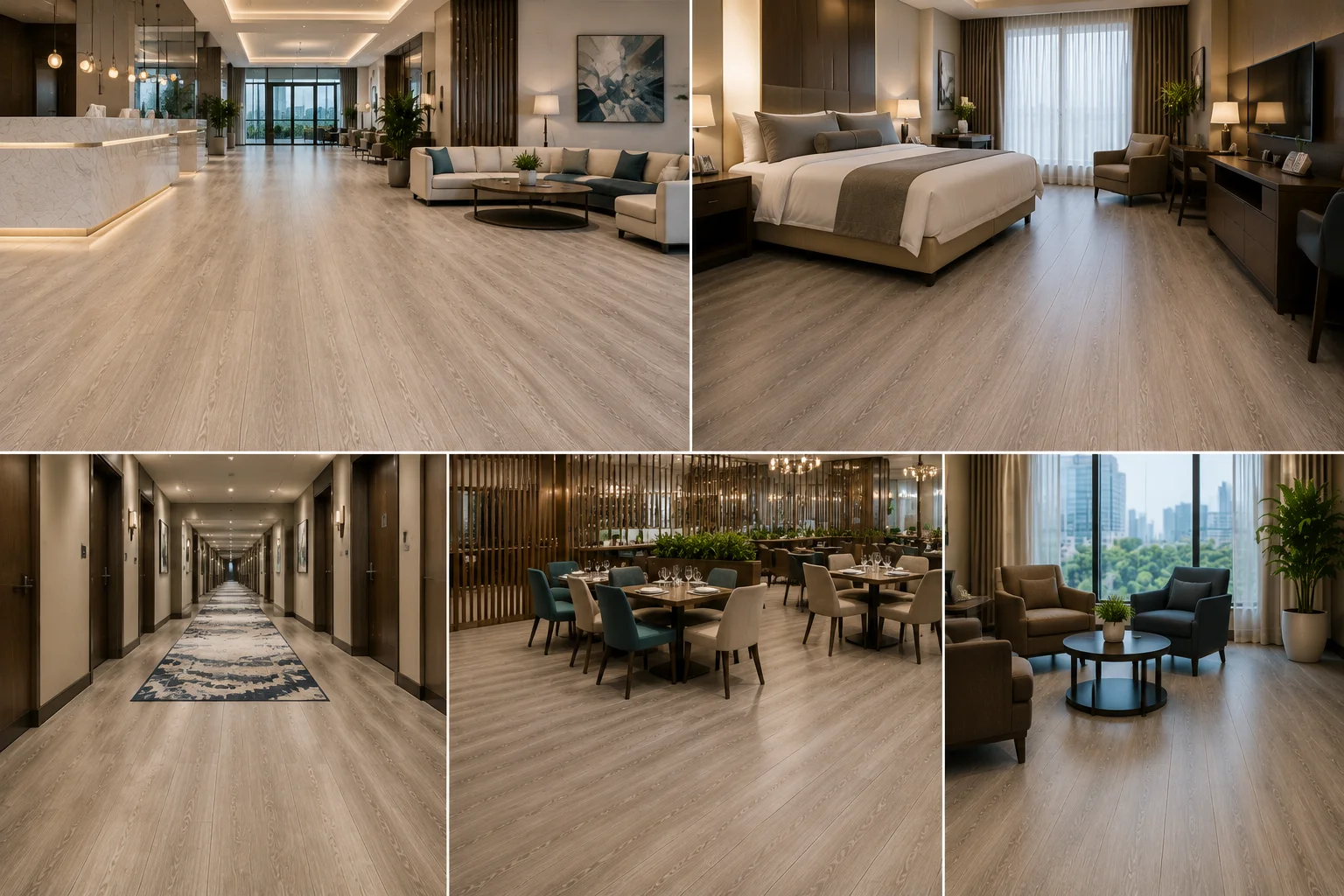
Hotels across the United States have widely adopted SPC flooring because the spc flooring features align perfectly with hospitality operational realities every day. Each public and private zone inside a property places different demands on flooring materials and SPC handles all of them confidently across many years of operation.
Guest Rooms
Guest rooms benefit enormously from SPC flooring because the waterproof construction handles bathroom door splashes, spilled drinks and HVAC condensation without damage. Acoustic underlayments built into modern planks reduce footfall noise transmission to the rooms below, which directly improves guest sleep quality and online review scores.
Corridors and Hallways
Corridors and hallways inside busy hotels experience constant foot traffic from guests, housekeeping carts, luggage trolleys and maintenance staff throughout the day. SPC flooring handles this abuse better than carpet or laminate because the rigid core resists rolling load dents while the wear layer prevents visible scuff marks.
Lobbies and Reception Areas
Lobby and reception zones serve as the first physical touchpoint between guests and the property, which makes flooring aesthetics genuinely important. SPC flooring delivers convincing wood and stone visuals that photograph beautifully for marketing while still surviving rain-soaked shoes, suitcase wheels and continuous cleaning year round.
Dining and Common Areas
Dining rooms and common lounges face daily spills from coffee, wine, sauces and water, all of which destroy traditional wood floors quickly. SPC flooring shrugs off these spills entirely because the surface is fully waterproof and stain resistant against most common food and beverage substances served onsite.
Conclusion
SPC flooring has earned its growing position inside American hospitality, residential and commercial interiors through real performance rather than marketing hype alone. Anyone still asking what is SPC flooring should now understand the layered construction, the durability profile and the specific scenarios where the category outperforms older alternatives.
Hotel operators in particular benefit from how SPC flooring handles guest rooms, corridors, lobbies and dining areas without compromise across years of intense daily use. Working with experienced suppliers and certified installers helps ensure that any SPC project delivers the full benefits the category genuinely offers across its long lifespan.