

Planning a large-scale hotel renovation can be overwhelming, dealing with delayed shipments, mismatched finishes, last-minute design changes and underprepared installation teams creating a poor impression before the property even reopens its doors. This is not suitable nor suggested for hotel owners and operators managing hundreds or even thousands of furniture pieces at a time and to tackle that, hospitality groups and property owners are now equipping a structured hotel furniture planning for renovation process that is reliable, faster and easier to manage. This also is helping the operations teams to get rid of needless rework and improving overall property turnaround.
But what is the need for a step-by-step renovation plan? Well, with the traditional way of handling hotel renovations, there were a lot of issues that needed a permanent fix and the only real way forward is a properly scoped, end-to-end approach that is built for scale.
Define Your Renovation Goals and Project Scope
A smooth renovation experience really starts well before the first piece of furniture is ordered and it all comes down to how the project goals and scope are set up, let's break it down.
The renovation goal needs to be clear before anything else, whether it is meeting a brand-mandated PIP, repositioning to a higher segment or refreshing tired finishes to compete with newer properties, the business case is shaping every decision that follows. Alongside that, the budget is including more than just the furniture itself, it is also including freight, warehousing, installation labor, contingency and the revenue impact during downtime. The timeline also needs to be aligned with construction milestones, peak booking seasons and any phased reopening strategy.
And it does not stop there, the 2026 guest is different from the 2018 guest, properties targeting business travelers are needing different ergonomics than those chasing leisure, extended-stay or wellness segments and getting clarity on this early is preventing expensive design pivots later on, which is extremely crucial for the entire renovation, from beginning until completion.
Key Areas in a Hotel Furniture Renovation
A hotel is a collection of distinct guest experiences and each area is having its own functional and design demands and to make the most of the renovation, every one of them needs to be addressed correctly, resulting in:
- Consistent brand experience across the entire property.
- Better durability matched to actual use in each space.
- Easier procurement and replacement in the long run.
- Stronger guest impressions from arrival to checkout.
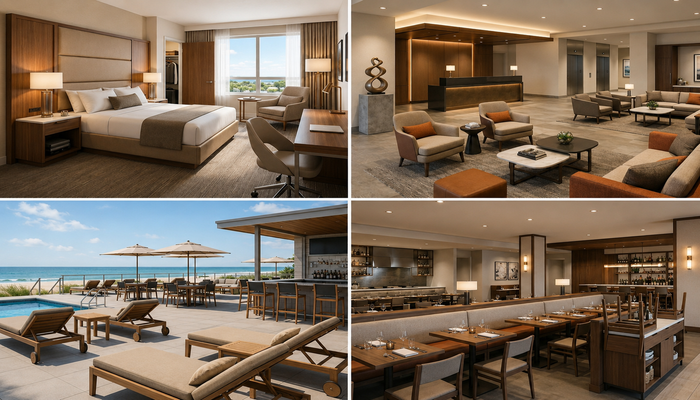
1. Guestroom Furniture
Guestrooms are driving the largest share of revenue and the strongest emotional impression. Beds, casegoods, desks, lounge chairs, headboards and nightstands all need to perform daily under heavy use and standardizing dimensions across rooms is also simplifying the hospitality furniture procurement process and any future replacement orders.
2. Lobby & Reception Areas
The lobby is setting the tone for the entire stay, it is where guests are forming their first impression and often where they are spending time working or socialising during the day. Reception desks, lounge seating, coffee tables and decorative pieces all need to balance comfort, durability and brand storytelling without crowding circulation paths.
3. Outdoor Furniture
Outdoor spaces like pool decks, terraces, rooftop bars and courtyards are now major revenue drivers. Furniture in these zones is required to withstand UV exposure, moisture, salt air and frequent cleaning, which is why marine-grade aluminum frames, solution-dyed acrylic fabrics and HDPE or teak surfaces are preferred for long-term performance.
4. Dining & F&B Areas
Restaurants, bars and banquet spaces are operating under intense daily wear. Chairs are pulled, dragged and stacked thousands of times, while tables are dealing with spills, hot plates and constant scrubbing. Reinforced joinery, commercial-grade upholstery and easy-to-reupholster banquettes are extending the life of these pieces well beyond the average residential equivalent.
8 Step-by-Step Guide to Planning
Switching to a structured renovation approach is bringing a number of real and measurable advantages for hotel owners and operations teams alike and these are the steps that are making the most difference on the ground, resulting in:
- A clear project brief signed off by ownership before any procurement begins.
- A property condition assessment documenting what stays, what gets refurbished and what gets replaced.
- A design intent package with mood boards, space plans and complete FF&E specifications.
- A vetted hotel furniture supplier USA partner brought in early as a consultant rather than a transactional vendor.
- A precise specification sheet for every piece covering dimensions, materials, finishes and packaging.
- A logistics and warehousing plan synced with construction milestones.
- A phased hotel renovation furniture installation schedule grouped by floor or wing.
- A thorough punch list and final walk-through before the property reopens.
Each of these steps is reducing risk, eliminating last-minute surprises and giving the ownership team full visibility from day one until the final guest walks back through the door.
Material Selection: What Actually Lasts
When it comes to material choices, the difference between a property that looks great for two years and one that holds up for ten is coming down to a few core decisions and these are the ones that are making the most difference in real-world hotel conditions.
For wood casegoods, hardwood frames with engineered substrates are outperforming pure particleboard, especially when paired with catalyzed lacquer or UV-cured finishes that are resisting scratches and chemical cleaners. For upholstery, performance fabrics rated 100,000 double rubs or higher are now the baseline for high-traffic public areas, while 50,000 double rubs with a stain-resistant finish is generally sufficient for guestrooms. For seating frames, kiln-dried hardwood with corner blocks and mortise-and-tenon joinery is lasting significantly longer than stapled pine. And for outdoor and metal components, powder-coated steel, anodized aluminum and marine-grade aluminum are essential for corrosion resistance.
When commissioning custom hotel furniture for renovations, owners are increasingly pushing suppliers for full transparency on every material layer, which is extremely crucial for protecting the long-term investment and avoiding premature replacement costs.
Common Mistakes in Hotel Furniture Renovation
Even experienced hotel owners and operators are running into the same pitfalls again and again and knowing these in advance is saving both time and money, the reasons are not hard to see.
The first one is underestimating lead times, custom hospitality furniture is often taking 14 to 22 weeks from approved drawings to delivery and adding freight or customs for imported pieces can easily stretch that further. The second one is choosing residential-grade furniture to save money, it is looking identical in photos but failing within months under real hotel use and the replacement cost is almost always exceeding the original savings. The third one is fragmenting procurement across too many vendors, where five suppliers for one property is meaning five lead times, five freight schedules and five points of failure.
And that is not all, the fourth one is skipping the prototype or mock-up room, which is the easiest way to catch dimensional errors and finish mismatches while they are still cheap to fix and the fifth one is neglecting the installation phase itself, because furniture sitting in a warehouse is not generating any revenue and a poorly coordinated install is delaying the reopening by weeks.
Final Thought
A large-scale hotel furniture renovation is no longer a once-in-a-decade event reserved for major brand resets. It has become an operational baseline for any property where guest experience and asset value matter. From reducing reopening delays to enabling consistent design and reliable hotel renovation furniture installation, a properly planned renovation powered by the right supplier partnership is giving owners a meaningful competitive advantage.
If making your hotel renovation faster, smarter and completely hassle-free from design through installation is something you have been looking at, then it is time to explore a fully managed hotel furniture renovation solution. Get in touch today and our team will handle the rest for you!