
Hotel Renovation Trends 2026: FF&E Ideas That Increase Guest Satisfaction
Key Takeaways:
- Hotel renovation trends in 2026 are being driven by guest satisfaction data and online review patterns rather than periodic aesthetic updates or brand cycle requirements alone.
- FF&E (furniture, fixtures and equipment) has the most direct measurable connection to guest satisfaction scores of any renovation category and should anchor the budget allocation decision.
- Sustainable material specifications including FSC-certified timber, recycled textile blends and low-VOC finishes are now a baseline guest expectation across the mid-scale and upscale segments and not a premium differentiator.
- Multifunctional casegoods and convertible furniture configurations are among the hotel guest room renovation ideas producing the strongest satisfaction outcomes in constrained room footprints.
- Technology integration should prioritize eliminating in-room friction, reliable controls, accessible charging and streaming connectivity, over adding features that most guests will never use.
- Phasing FF&E investment to prioritize guestroom elements before common-area updates consistently produces better satisfaction ROI in the first renovation cycle.
- A room-by-room FF&E audit before renovation planning begins prevents over-specification in low-impact areas and under-investment in the areas where guests will most clearly notice the difference.
Quick Answer: Hotel renovation trends in 2026 are centered on FF&E upgrades that directly improve guest satisfaction - from ergonomic and multifunctional furniture to sustainable material specifications and friction-free technology integration. The properties producing the strongest results are those treating every renovation decision as a guest experience investment rather than a maintenance exercise and phasing budgets to prioritize guestroom FF&E above all other categories.
The way hotel owners and asset managers approach renovation has changed significantly and the hotel renovation trends shaping purchasing and design decisions in 2026 look very different from what drove renovation programmes just a few years ago. Property investment is no longer being guided primarily by brand PIPs and aging aesthetics, instead it is being guided by guest satisfaction data, online review patterns and a much clearer understanding of which FF&E and design decisions actually move the scores that determine rate positioning and booking conversion.
Hotel renovation trends in 2026 are reflecting this shift across every category, from how guestroom furniture is being specified to how sustainable materials are being selected and how technology is being integrated into the room environment. And while the visual outputs of these hotel renovation trends are easy to photograph for brand presentations, the real driver behind all of them is a guest population that has become significantly more specific about what a quality hotel stay needs to deliver and significantly more vocal when it does not.
This article covers the hotel renovation trends, hotel renovation ideas and FF&E strategies that are producing real results in 2026 and what property owners planning a renovation programme need to understand before capital decisions are made.
Hotel Renovation Trends Shaping the Future of Hospitality
The hotel renovation trends gaining the most traction in 2026 are not being driven by aesthetics for their own sake, they are responding directly to the experience gaps that are showing up most consistently in post-stay reviews and satisfaction surveys. Dated room environments, poor lighting quality, inadequate workspace setups and furniture that prioritizes appearance over usability are among the most frequently cited complaints across all hotel segments and the hotel renovation trends making a measurable difference are those targeting each of these gaps specifically.
What is accelerating these hotel renovation trends more than anything else is the change in the benchmark guests are now using to evaluate their in-room experience. Travelers are no longer comparing their hotel room against other hotel rooms - they are comparing it against the residential environments they know well and that comparison is raising the threshold on what quality furniture, considered lighting and thoughtful room configuration need to deliver. Hotel room design trends are reflecting this with a clear move toward residential-feel layouts, warmer material palettes and FF&E specifications that feel like deliberate choices rather than catalog defaults selected at the lowest available price.
At the same time, brand standard updates and active PIP timelines are placing more properties on renovation schedules simultaneously and the hotel renovation trends being driven by franchise compliance are accelerating cycles in ways that make procurement lead times and supply chain reliability more important than ever. These are the hotel renovation trends that are actually moving budgets and shaping the specification decisions that matter in 2026.
Hotel Renovation Upgrades That Enhance Property Value
Not every renovation upgrade generates equal returns and this is one of the most consistent gaps between hotel renovation trends as discussed and hotel renovation trends as actually implemented - many programmes fall short of what owners intended because the capital goes to the wrong priorities. Properties allocate budget to visible surface updates - new carpet, fresh paint, replacement soft goods - without addressing the FF&E decisions that actually shift how guests perceive the property and rate it in reviews. The hotel renovation trends and hotel renovation ideas that consistently produce measurable improvements to property value are those targeting the intersection between guest experience quality and the operational durability of the investment.
High-Value FF&E Improvements in Renovation
FF&E (furniture, fixtures and equipment) represents the renovation category with the most direct connection to guest satisfaction scores and understanding which hotel renovation trends are moving within this category is essential for owners who want their investment to produce review score improvements rather than visual updates that guests barely notice. Travelers do not evaluate brand-standard compliance the way franchise inspectors do but they absolutely notice when a mattress feels undersized for the bed frame it sits on, when a desk chair becomes uncomfortable within twenty minutes of use or when a wardrobe door does not close without forcing it.
The hotel FF&E trends producing the strongest satisfaction results in 2026 are focusing on upholstered headboards with structural depth sufficient to lean against comfortably, platform bed bases that eliminate the maintenance burden of a traditional box spring, task chairs with genuine ergonomic adjustability and casegoods with integrated cable management that reflects how modern travelers actually charge and connect their devices. Each of these hotel renovation trends addresses a specific guest complaint and generates a specific review-score benefit that procurement teams can demonstrate when defending the specification against cost-cutting pressure.
Quality Furniture and Finishes Upgrade
The hotel furniture trends that are translating most consistently into improved guest satisfaction outcomes are moving away from the cost-per-unit purchasing logic that has driven FF&E procurement for decades and this shift is one of the most commercially significant hotel renovation trends gaining ground across the mid-scale and upscale segments. Properties that specify furniture primarily on initial cost find that their renovation delivers an immediate visual improvement that deteriorates within eighteen to twenty-four months as cheaper materials begin to show wear under commercial use conditions and that deterioration is not invisible to guests.
What is replacing it is a lifecycle cost approach where replacement frequency, maintenance requirements and the review score impact of visible wear are factored into the specification from the outset. Solid wood casegoods with commercial-grade veneer finishes, upholstery specified to contract-grade rub-count standards and metal hardware with durable powder-coat finishes are the hotel furniture trends gaining ground among properties that are serious about protecting the value of their renovation investment across its full intended lifecycle and these are the specifications that separate the hotel renovation trends producing genuine ROI from those that simply produce updated photography.
Balancing Renovation Costs With ROI
Every hotel renovation programme involves trade-offs between what owners want to achieve and what the budget can realistically support and managing those trade-offs is what separates the hotel renovation trends that generate measurable returns from those that simply spend capital. The hotel renovation ideas influencing budget allocation in 2026 reflect a clearer understanding of which investments move RevPAR and guest satisfaction scores and which produce cosmetic improvements that guests do not notice or reward with higher ratings.
Phasing renovation investment - prioritizing guestroom FF&E and the elements guests interact with directly before back-of-house and common-area updates - consistently produces better satisfaction ROI in the first renovation cycle. This approach, which is increasingly central to how hotel renovation trends are being implemented in 2026, allows the property to begin capturing review score and rate benefits before the full budget has been deployed and creates a documented performance baseline that informs the scope of subsequent phases.
Sustainable Materials and Finishes to Attract Eco-Conscious Guests
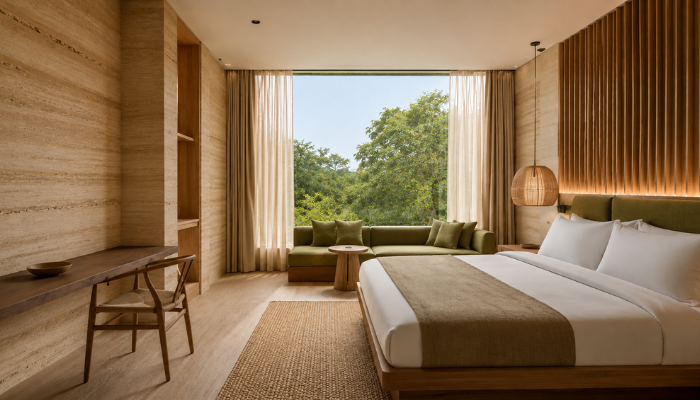
Sustainability in hotel renovation has moved from being a marketing differentiator to a genuine guest expectation and the hotel renovation trends responding to this shift are doing so in practical, specification-level terms rather than through certification PR. Hotel renovation trends around sustainability in 2026 are being driven by travelers who are more aware of the environmental claims hotels make and more skeptical of properties that market green credentials without demonstrating them through visible material choices and documented procurement standards.
The hotel bedroom design trends and hotel renovation ideas reflecting this shift include natural fiber upholstery fabrics in wool, linen and recycled textile blends; wood-based casegoods certified to responsible forestry standards; low-VOC finishes on all painted and coated surfaces; and carpet and flooring products with documented recycled content and manufacturer-operated end-of-life take-back programmes. These hotel renovation trends are no longer limited to design-forward boutique properties - they are becoming standard elements of FF&E briefs for renovation projects across the mid-scale and upscale segments as procurement teams build sustainability requirements directly into their supplier qualification criteria.
And that is not all - the hotel renovation trends around sustainable specification also deliver operational benefits that compound over the life of the renovation cycle in ways that satisfaction scores alone do not capture. LED lighting systems, low-flow plumbing fixtures and HVAC controls upgraded as part of the FF&E programme reduce the property's ongoing energy and water costs in ways that produce a financial return separate from and in addition to the guest satisfaction benefit. For hotel owners evaluating the full ROI of a renovation programme, energy cost reduction from sustainable specification decisions is a meaningful line item that frequently helps justify the upfront premium that sustainable materials carry.
The challenge for procurement teams acting on these hotel renovation trends is ensuring that sustainability claims from suppliers are substantiated through recognized certification standards rather than self-reported marketing language. This is one of the hotel renovation trends where the gap between what properties say they are doing and what they can actually document is still wider than it should be. FSC certification for timber products, the Global Recycled Standard for fabrics and Cradle to Cradle assessments for broader product categories are the documentation requirements that rigorous procurement programmes are now building into their supplier approval processes and the hotel FF&E trends moving through 2026 reflect a supply chain that is increasingly structured to meet those requirements at the scale that hotel renovation programmes demand.
Hotel Guest Room Renovation Ideas
The guest room is the most commercially consequential space in any hotel renovation programme because it is where guests form their most detailed impressions of the property and where the review decisions that determine online reputation are made. The hotel guest room renovation ideas producing the strongest satisfaction outcomes in 2026 are those that treat the room as a system - where hotel renovation trends in lighting, furniture configuration, technology integration and material selection are designed to work together rather than specified by separate teams against separate budgets without a coordinating design logic. Let's look at the specific hotel guest room renovation ideas that are producing measurable results.
Personalized Guest Room Configurations
One of the hotel renovation trends gaining the most significant traction in 2026 is the move away from a single guestroom configuration applied uniformly across an entire floor or wing toward a deliberate mix of configurations that serve different traveler types more precisely. Business travelers need desk setups that support multi-hour work sessions with adequate surface area, task lighting at the correct angle and accessible power at the desk rather than tucked behind the headboard. Leisure travelers prioritize lounging space, luggage accessibility and the ability to configure the room for two people with different in-room habits.
Renovation programmes that acknowledge these differences and configure rooms accordingly - even within the same room category and floor plan - consistently generate stronger satisfaction scores from both traveler segments because the room actually fits the way it is being used. The hotel guest room renovation ideas and hotel renovation trends addressing this include convertible furniture that allows a desk to function as a dining surface, pull-out seating that creates a secondary lounge position and luggage storage solutions that keep the floor clear without consuming closet space.
Hotel Furniture Trends Focused on Functionality
The hotel renovation trends and hotel furniture trends that are proving most effective at improving guest satisfaction scores are those solving specific friction points in the guest's in-room experience rather than simply updating the visual aesthetic of the space. A headboard that incorporates reading light positioning, USB-A and USB-C charging at both sides of the bed and a padded surface guests can lean against comfortably is a more impactful hotel renovation investment than a headboard that looks more contemporary but addresses none of those functional gaps.
The same principle applies across every furniture category in the room - lounge chairs deep enough to sit in for an extended period, desk chairs that adjust to support both focused work and casual use and ottomans and bench seats at the bed base that serve as a luggage surface without occupying primary floor space. These are the hotel furniture trends and hotel renovation trends that guests respond to in ways that show up in review language and satisfaction scoring because they remove problems that travelers actively experience rather than adding features they will never notice.
Multifunctional Casegoods, Seating and Storage Solutions
Multifunctionality has become one of the defining hotel room design trends and hotel renovation trends in 2026 and the hospitality casegoods category is where it is most visible and most impactful on guest experience outcomes. Guest rooms - particularly in urban hotels where net room area is constrained - are being renovated with casegoods that consolidate what previously required multiple separate furniture pieces into single well-designed units that deliver more utility within the same or smaller footprint. A media unit that incorporates the minibar, the in-room safe, clothing storage and a luggage surface within one architectural piece is a casegood specification that delivers substantial guest utility without expanding furniture count or reducing available floor area.
Seating solutions are following the same hotel renovation trends, with ottomans specified to open for additional storage, sofa beds selected for actual overnight sleeping comfort rather than as a nominal third sleeping surface and modular seating configurations that can be repositioned by the guest to suit how they use the room. These hotel guest room renovation ideas address one of the most consistent themes in guest satisfaction data - the sense that the room was not designed for the way real guests actually use it and they do so through FF&E specification rather than structural modification that would require significantly higher capital investment.
Tech-Integrated Guest Rooms for Smarter Experience
Technology integration is one of the most discussed hotel room design trends and hotel renovation trends in the industry and it is also one of the most frequently mishandled in renovation execution, where the gap between what technology is added to a room and what actually improves the guest experience is wider than most operators realize. The hotel renovation trends producing measurable satisfaction gains through technology are those that focus on eliminating friction from the guest's in-room experience rather than adding features that most guests will never use.
Travelers in 2026 expect to control room temperature, lighting and the television from a single point - whether a room tablet, a voice interface or their own device and the hotel renovation trends addressing this expectation are focusing on reliability and intuition rather than the feature count that was driving technology decisions in earlier renovation cycles. A room where the thermostat requires multiple steps to adjust, where blackout curtains can only be operated manually and where charging a device requires moving furniture to reach an accessible outlet generates friction regardless of how well the FF&E was specified or how recently the renovation was completed and this friction is one of the hotel renovation trends that the industry is most actively working to address.
The hotel renovation trends and hotel room design trends that translate directly into higher satisfaction scores through technology integration are practical rather than feature-heavy: USB-A and USB-C outlets at both the bedside and desk as a standard specification; HDMI or wireless streaming connectivity at the main display that allows guests to use their own content; and smart room controls that are intuitive enough to use without reading a guide. These are hotel renovation ideas that remove problems guests actively notice and write about in reviews - which is a far more reliable path to score improvement than adding technology that generates operational complexity without a corresponding guest experience benefit.
Building an FF&E Renovation Strategy
A well-structured FF&E renovation strategy is what prevents hotel renovation trends from being implemented as a series of disconnected purchasing decisions that look coordinated on a mood board but fail to deliver a coherent guest experience or a financially defensible return. The hotel FF&E trends and hotel renovation trends that properties are building into their strategy development in 2026 reflect a more sophisticated understanding of how procurement decisions affect both the immediate guest experience and the long-term cost of sustaining the renovation across its full intended lifecycle.
The starting point is a room-by-room FF&E audit that identifies which existing elements are genuinely serviceable, which require immediate replacement and which can be addressed in a subsequent renovation phase without affecting guest satisfaction or brand compliance. This approach - which is increasingly central to how hotel renovation trends are being implemented rather than just discussed - prevents over-specification in areas where guests do not notice improvement and under-investment in the areas where they clearly do, while producing the item-level data that makes supplier selection and logistics coordination manageable rather than reactive.
Supplier relationships are the second critical element of an effective FF&E strategy and the hotel renovation ideas and hotel renovation trends that produce the best outcomes are those where procurement teams engage with a defined set of suppliers who have demonstrated experience in hospitality-grade manufacturing, documented lead time reliability and a working understanding of the brand compliance requirements the renovation must satisfy. A supplier relationship built on those foundations provides access to product development conversations that can influence the specification before it is finalized - which is considerably less expensive than discovering a specification issue after an order has been placed and a production run has already begun.
Installation sequencing and logistics coordination are the final element and consistently the most underestimated across hotel renovation trends and programmes of all scales. An FF&E programme that arrives on site without a clear installation sequence, without adequate temporary storage coordination and without a documented snag resolution process adds measurable cost and time to a renovation already operating under schedule pressure. Building these elements into the strategy at the outset is what allows the hotel renovation programme to be completed on schedule and to the specification that was approved.
Conclusion
Hotel renovation trends in 2026 are being shaped by a guest population that is more informed, more specific about what they expect from a hotel stay and more willing to express dissatisfaction publicly when those expectations are not met. The hotel renovation ideas and hotel renovation trends producing the strongest outcomes are those that connect every FF&E and design decision directly to a guest experience result - whether that is comfort, functional ease, sustainability credibility or frictionless use of the technology the room provides.
For hotel owners and procurement teams planning renovation programmes, the direction these hotel renovation trends point is consistent and clear. Properties that invest in well-specified FF&E, thoughtfully configured guest rooms and material choices that reflect genuine sustainability commitments are consistently outperforming their competitive set on satisfaction scores, rate positioning and the review quality that drives online booking conversion. The renovation strategy that builds its priorities around these hotel renovation trends is the one that produces returns the property can carry forward for the full lifecycle of the investment.
- SOFT SEATING
- BATHROOM VANITY
- FIXTURE EQUIPMENT
- Hospitality Casegoods
- Hospitality outdoor furniture
- Senior Living Furniture
- Hotel reception desk
- High end contract furniture
- Premium Hotel Bedroom Furniture
- Custom commercial furniture
- Hospitality Furniture Manufacturers in Canada
- Leading Hotel Furniture Manufacturers in Canada
- Casegood manufacture canada
- Cultured Marble
- SPC Flooring
- Boutique Hotel Furniture
CATEGORIES




FREQUENTLY ASKED QUESTIONS