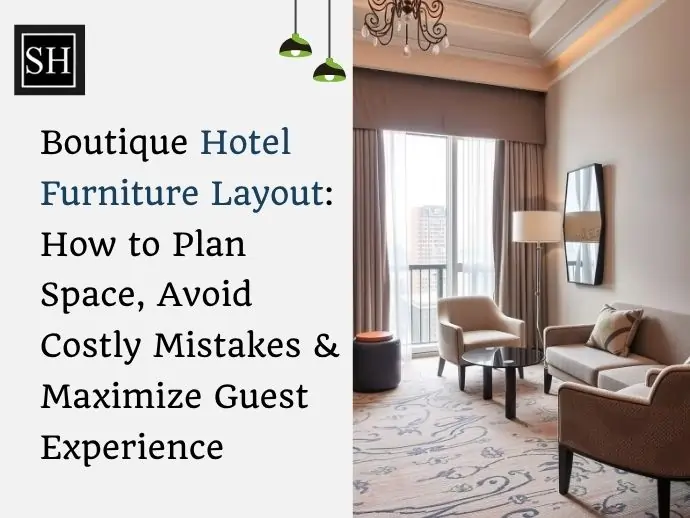
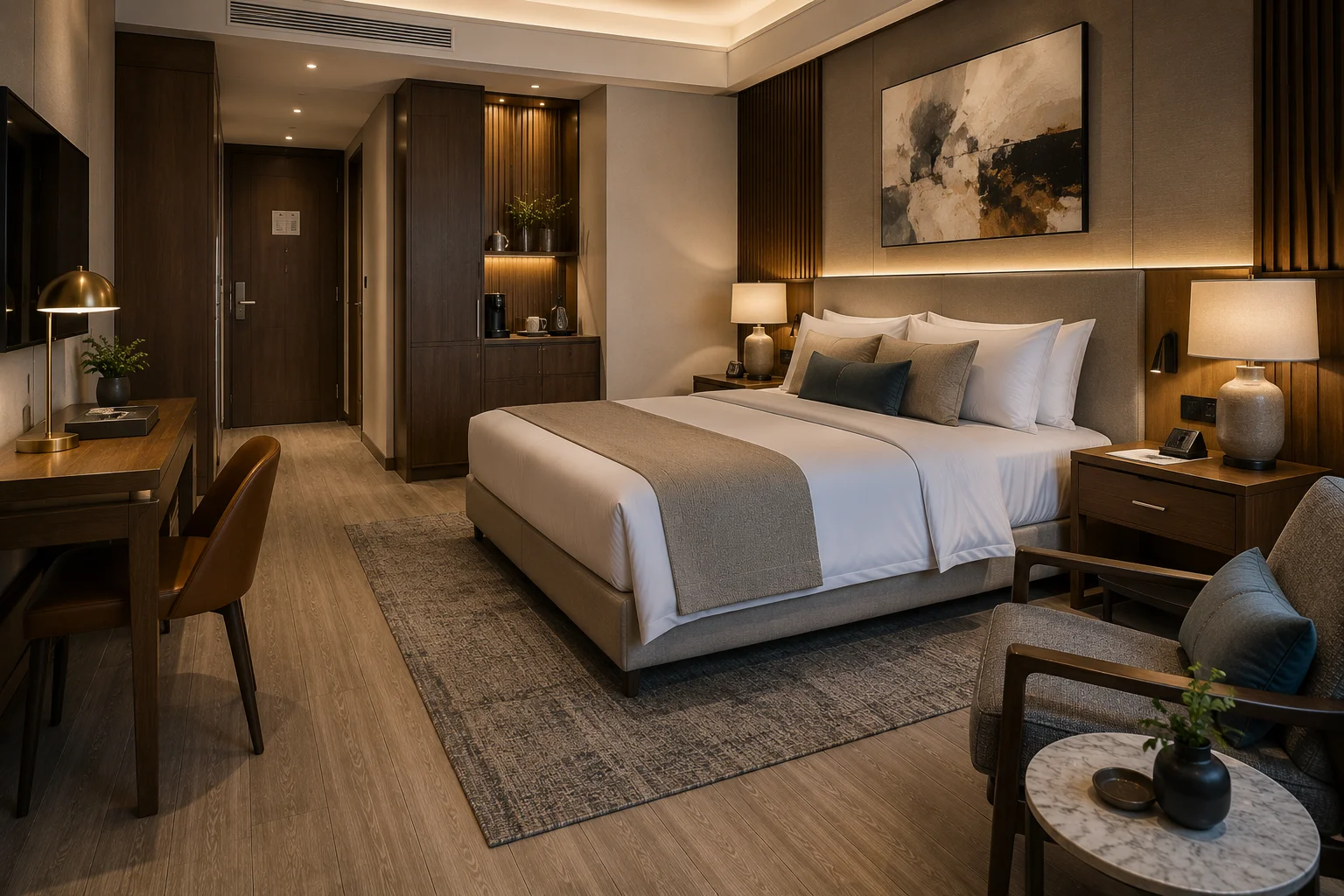
A guest walks into your boutique hotel room. Before they check the Wi-Fi, before they test the bed - they feel the room. Whether it opens up or closes in. Whether it makes sense or creates confusion. That first impression is built entirely by how the furniture is laid out, and it is either working for your property or quietly working against it.
For boutique hotel owners managing rooms that need to deliver both personality and function, poor furniture layout is one of the most common and costly problems in the industry. At Sara Hospitality USA, we have worked with boutique properties long enough to know that boutique hotel furniture layout planning needs to start much earlier than most operators think - and the mistakes that get made when it does not tend to be expensive ones.
Why furniture layout planning fails in boutique hotels
Most layout problems do not begin on the floor. They begin on the floor plan - or the absence of a proper one. Designers work from architectural drawings without accounting for how guests actually move and live inside a room. The result is a space that looks fine in a render and feels wrong the moment someone opens a suitcase in it.
Unlike chain hotels that follow standardised room templates, boutique properties deal with individuality. A bay window here, a structural column there, a slanted roofline nobody planned around. When those rooms are furnished using generic approaches, the problems stack. Guests feel cramped in well-sized rooms. Circulation paths get blocked. Furniture proportions feel off without anyone being able to say exactly why. And rooms photograph badly, which hits booking conversion before a guest has even arrived.
Knowing how to plan furniture for boutique hotel rooms from the ground up is not a bonus skill - it is a competitive baseline.
How guests actually use a hotel room
Here is the honest version of how hotel rooms get used. The desk becomes a dumping ground. Suitcases end up open on the floor because the luggage rack is behind a door. Guests navigate in the dark at 2am with no spatial logic to guide them. Power points are where they were easy to wire, not where anyone actually sits. Nothing works the way the designer intended.
Boutique hotel furniture layout planning needs to work with actual guest behaviour - not an idealised version of it. That means clear walking paths from door to bed to bathroom. Charging access near where people actually sit and sleep. Enough surface space that guests are not rearranging the room to function in it. Storage that handles a real suitcase without blocking everything else.
When layout starts from this behavioural baseline, rooms get described as "comfortable" and "thoughtful." Those words translate into five-star reviews. And five-star reviews fill rooms.








Core principles of boutique hotel furniture layout
A few things hold across every room type, regardless of size or price point.
Function first, aesthetics second. A beautiful room that is difficult to live in is a failed room, full stop. Proportional balance matters - furniture scale has to match the room it sits in. Oversized beds in compact spaces and undersized chairs in generous suites both register immediately, even when guests cannot articulate exactly what feels off. Every room needs defined zones for sleeping, working, relaxing and storing, and minimum clearances of 900mm on circulation sides of the bed are not targets - they are the floor.
Common mistakes in boutique hotel furniture layout
These are the errors we see most often, and the ones that are actively costing boutique hotels guest satisfaction scores right now.
The most common: placing the bed against the wrong wall. Most operators default to the longest wall without thinking through natural light, view axis or circulation. The fix is simpler than it sounds - position the bed toward the room's best feature and build clearance outward from there.
Second is ignoring the entrance. The first two metres inside the door set the tone for the entire stay. An oversized wardrobe crammed into a narrow corridor, no landing surface, furniture blocking the sightline straight into the room - these create a bad first impression before the guest has even put their bag down. In boutique hotels, where the design is part of what the guest paid for, that matters more than anywhere else.
Third: choosing furniture that looks right but fits wrong. A king upholstered bed frame might photograph well but leave 600mm clearance either side in a 4.2m room. You need to confirm dimensions on a scaled floor plan before purchasing, not after the delivery arrives.
And then no charging strategy. Power access is a basic expectation now. Furniture placed without any reference to the electrical plan forces guests into workarounds every single night. This is also one of the most common mistakes in boutique hotel furniture layout that Sara Hospitality USA helps clients avoid early in the project - coordinating furniture dimensions and placement with the electrical plan before first-fix work begins.
Layout strategies for different room types
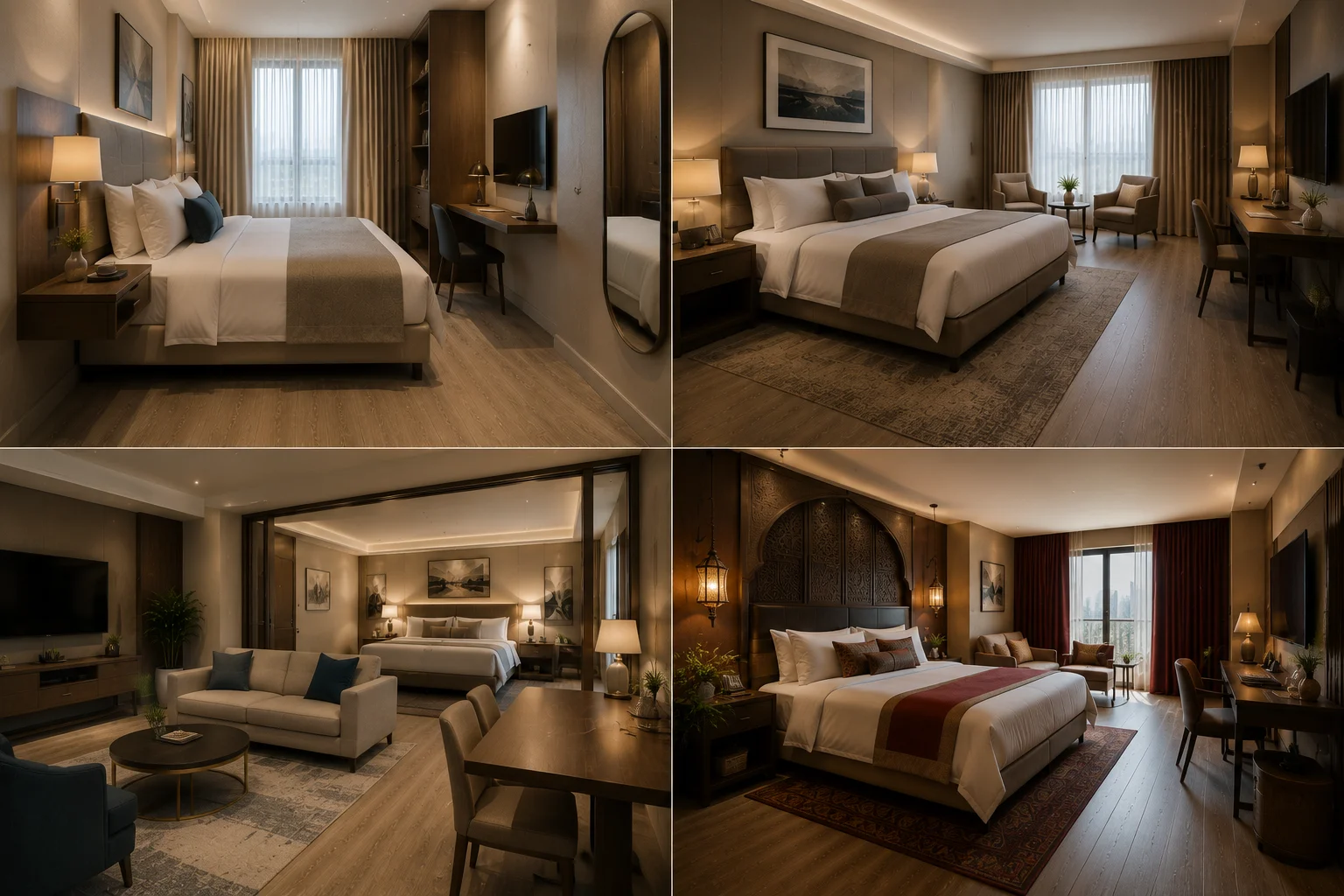
- Small boutique rooms are where layout makes or breaks the experience. Space saving furniture for boutique hotels is not a compromise in these rooms - it is the entire strategy. Wall-mounted bedside tables, beds with integrated drawer storage, compact writing shelves instead of full desks, built-in wardrobes, mirrors placed opposite windows to expand perceived space. Every piece needs to earn its position. If it is only doing one job, it probably should not be there.
- Standard rooms offer more flexibility but demand more discipline. With additional space comes the temptation to over-furnish. Establish clear clearances around the bed, give guests a workspace that actually functions ergonomically, and keep the floor clear. Empty floor space reads as luxury.
- Suites shift the challenge from maximising space to creating genuine domestic comfort across multiple zones. The living area should feel independently comfortable - not like an afterthought attached to a bedroom. Define zones with rugs, lighting and furniture groupings rather than walls.
- Themed rooms are a different problem. The concept has to guide the layout without compromising function. Prioritise function first, then find furniture that fits the theme within that functional framework. Doing it the other way around is how themed rooms end up feeling like sets rather than stays.
Why custom furniture is not optional for boutique hotels
Off-the-shelf furniture is built for the widest possible market - standard dimensions, standard materials, standard aesthetics. For a boutique hotel competing on design identity, standard is precisely what you are trying to avoid.
Working with custom boutique hotel furniture suppliers gives you something retail simply cannot - precise fit. When a wardrobe is built to the exact recess available, when a bed frame is dimensioned for your specific room width, when a desk aligns with your window height and existing socket positions, the room stops looking furnished and starts feeling designed.
At Sara Hospitality USA, every piece goes through the full process: design, brand approval, manufacturing and delivery, all managed in one place. That matters because it means the furniture that arrives on site matches the furniture that was planned. For boutique properties managing multiple room types across a single property, that consistency is the difference between a cohesive guest experience and a mixed one.
Custom suppliers also offer contract-grade durability for hospitality environments - materials and constructions built to withstand the turnover cycles that residential furniture is not designed for.
How layout decisions affect your budget
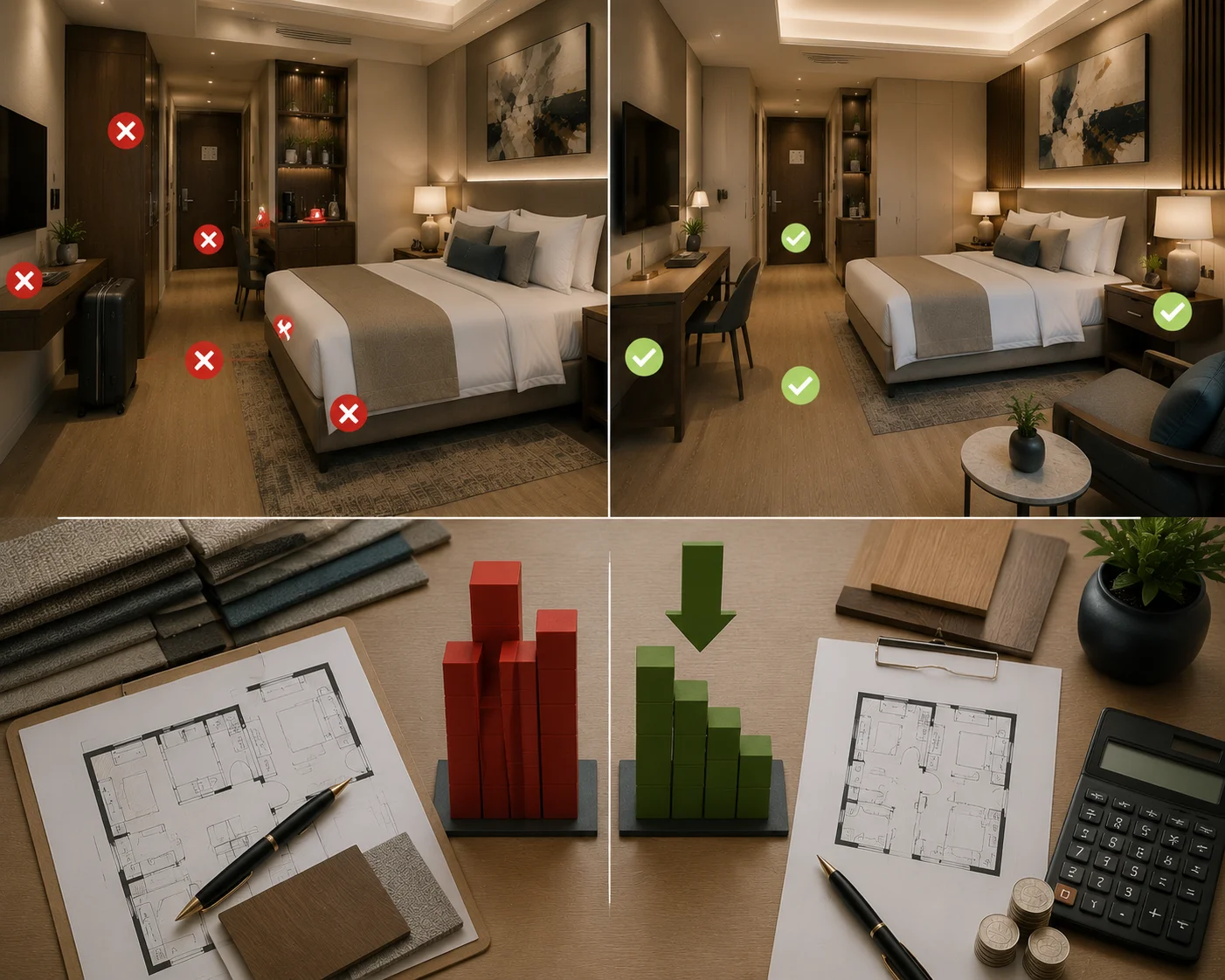
Getting layout wrong early costs significantly more than getting it right. Returning or replacing furniture that does not fit involves restocking fees, delivery costs and lead time delays. Revisiting electrical or plumbing work to accommodate furniture changes post-installation is one of the more expensive corrections any fit-out can absorb.
A properly planned layout also reduces the number of pieces required per room. When space saving furniture for boutique hotels is doing more than one job, and when built-in solutions replace multiple freestanding units, the per-room furniture count drops. Across a multi-room property, that reduction adds up quickly - and the savings can be reinvested in quality rather than quantity.
Execution: from layout to installation
Get accurate as-built measurements before anything else. Architectural drawings are frequently inaccurate by the time construction completes, and every millimetre matters when you are fitting custom pieces to specific recesses.
Develop scaled floor plans for every room type - not just the representative one. Variations in ceiling height, window position and socket location all affect layout decisions and need to be mapped individually. Select furniture against those plans, not from a catalogue in isolation.
Share the confirmed layout with electrical, lighting and plumbing contractors before first-fix work begins. This one step prevents most of the costly mid-project corrections that come from independent planning streams. For complex or flagship rooms, commission a 3D render - it catches proportion and circulation problems that 2D plans consistently miss.
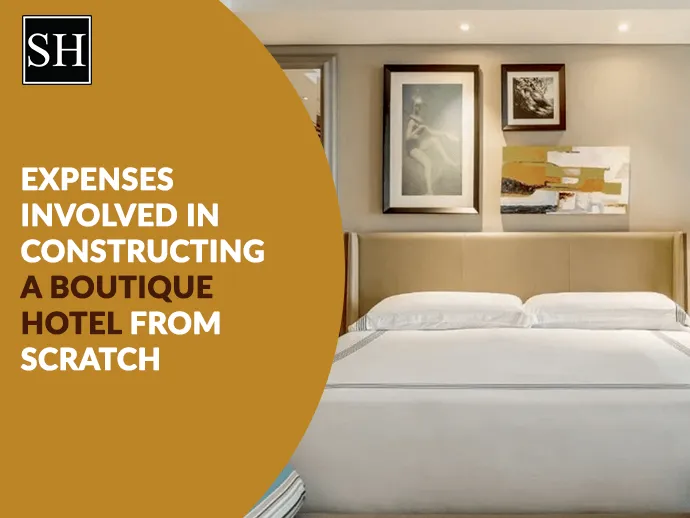
Deliver and install in sequence: fixed and built-in pieces first, loose furniture after the room is protected. Walk every completed room against the original layout plan before handover. Issues found at that stage are still correctable. For a deeper understanding, read our guide on cost to build a boutique hotel from scratch .
Quick furniture layout checklist
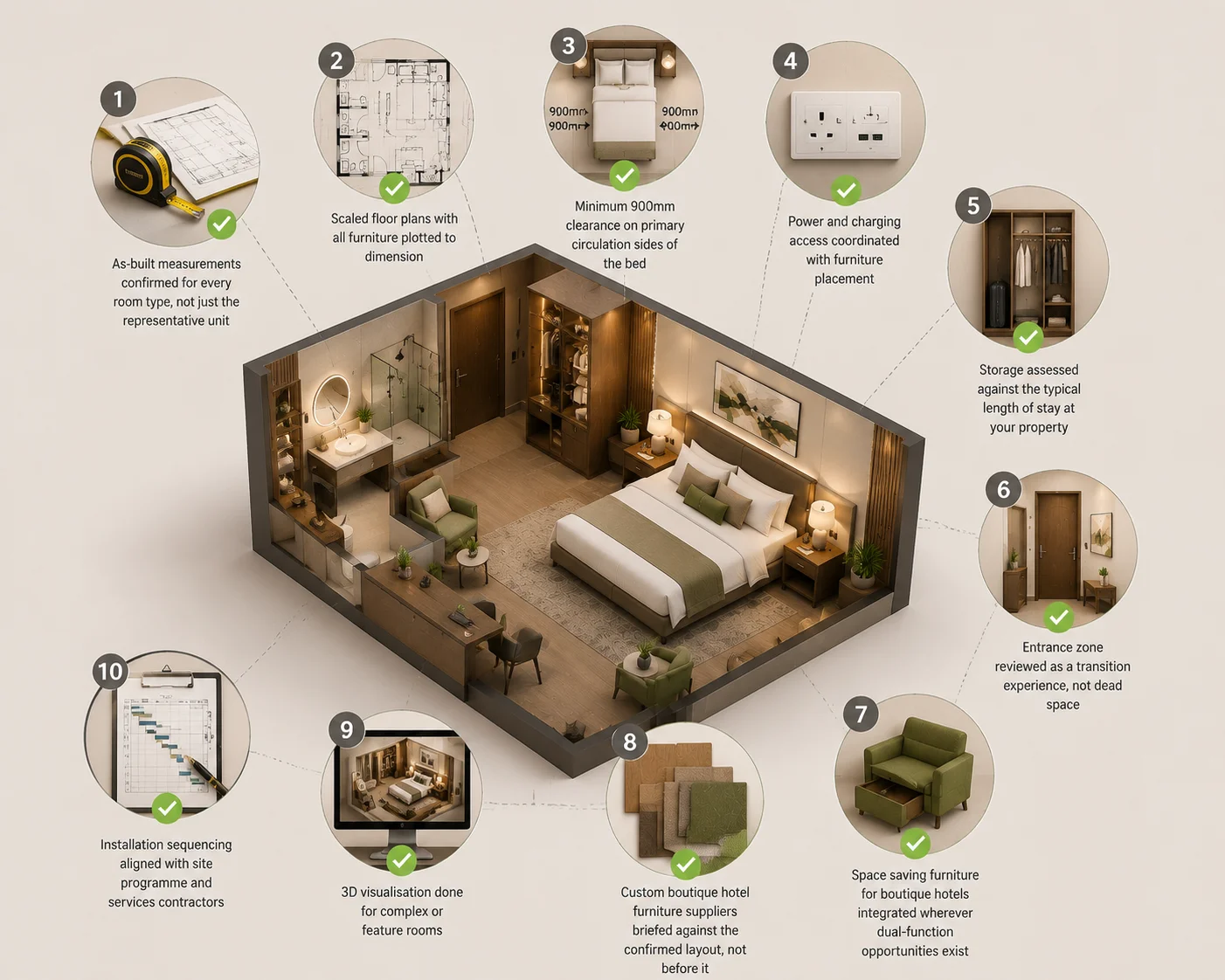
- As-built measurements confirmed for every room type, not just the representative unit
- Scaled floor plans with all furniture plotted to dimension
- Minimum 900mm clearance on primary circulation sides of the bed
- Power and charging access coordinated with furniture placement
- Storage assessed against the typical length of stay at your property
- Entrance zone reviewed as a transition experience, not dead space
- Space saving furniture for boutique hotels integrated wherever dual-function opportunities exist
- Custom boutique hotel furniture suppliers briefed against the confirmed layout, not before it
- 3D visualisation done for complex or feature rooms
- Installation sequencing aligned with site programme and services contractors
Conclusion
Boutique hotel furniture layout planning shapes how your rooms feel to guests, how efficiently your team operates, and how far your fit-out budget actually goes. From small boutique rooms where every square metre has to work harder to suites that need to deliver genuine residential comfort, the way furniture is positioned, proportioned and specified is what separates a property guests remember from one they simply slept in.
Getting this right means starting earlier, thinking in three dimensions, coordinating across disciplines from the beginning, and working with custom boutique hotel furniture suppliers who understand both the durability demands of hospitality and the design standards that boutique properties are built on. Sara Hospitality USA has been doing exactly that for over a decade - and that experience shows up in every room we help bring to life.