
Nobody warns you about this part, you sit down with a contractor, maybe a designer too and suddenly the numbers on the table are either way higher than you expected - or suspiciously low in ways that make you nervous. That's the reality of hotel renovation cost planning and it catches operators off guard more often than it should.
Here's the honest truth. There isn't one number. Never has been. The guest room renovation cost at a budget property looks nothing like what you'd spend at an upscale or luxury hotel and even two properties in the same segment can end up with wildly different final budgets depending on age, location, scope and a dozen other things that don't show up in any estimate until you're already into the project.
This guide walks you through all of it - the benchmarks, the factors, the sample numbers and the stuff that actually affects your budget in 2026 that most guides quietly skip over.
Average Hotel Renovation Cost Per Room (2026)
Start with cost per guest room. It's the most practical metric in the business because you can multiply it by your room count and get a rough but workable starting number without needing a full project scope in hand yet - and most hospitality consultants use this as their first anchor before anything more specific gets layered in.
Here's what the hotel renovation cost per room typically looks like across segments in 2026:
|
Hotel Category |
Typical Renovation Cost Per Room |
|
Economy / Budget Hotels |
$4,000 – $6,000 |
|
Midscale Hotels |
$7,000 – $20,000 |
|
Upscale Hotels |
$20,000 – $35,000 |
|
Luxury Hotels |
$33,000 – $46,000+ |
Explore Our Hospitality Projects
See how Sara Hospitality furniture is used in real hotels and commercial properties across the USA.
Now here's where people get tripped up. These per-room figures cover what's inside the room - flooring, wall finishes, lighting, bathroom tile and fixtures, furniture replacement and window treatments. That's it. Lobbies aren't there. Corridors aren't in there. Restaurants, pool areas and anything exterior? Not included either and adding those into the picture increases total hotel renovation costs by quite a bit depending on how much of the property is being touched.
Hotel Renovation Cost Per Square Foot
Square footage becomes the more useful unit once you start talking about public spaces - lobbies, F&B areas, conference rooms - where room count simply doesn't apply as a measuring stick and most experienced operators use both metrics together rather than treating one as the definitive answer.
|
Property Type |
Renovation Cost per Sq. Ft. |
|
Motel Renovation |
$120 – $180 |
|
Midscale Hotel Renovation |
$180 – $300 |
|
Luxury Hotel Renovation |
$300 – $441+ |
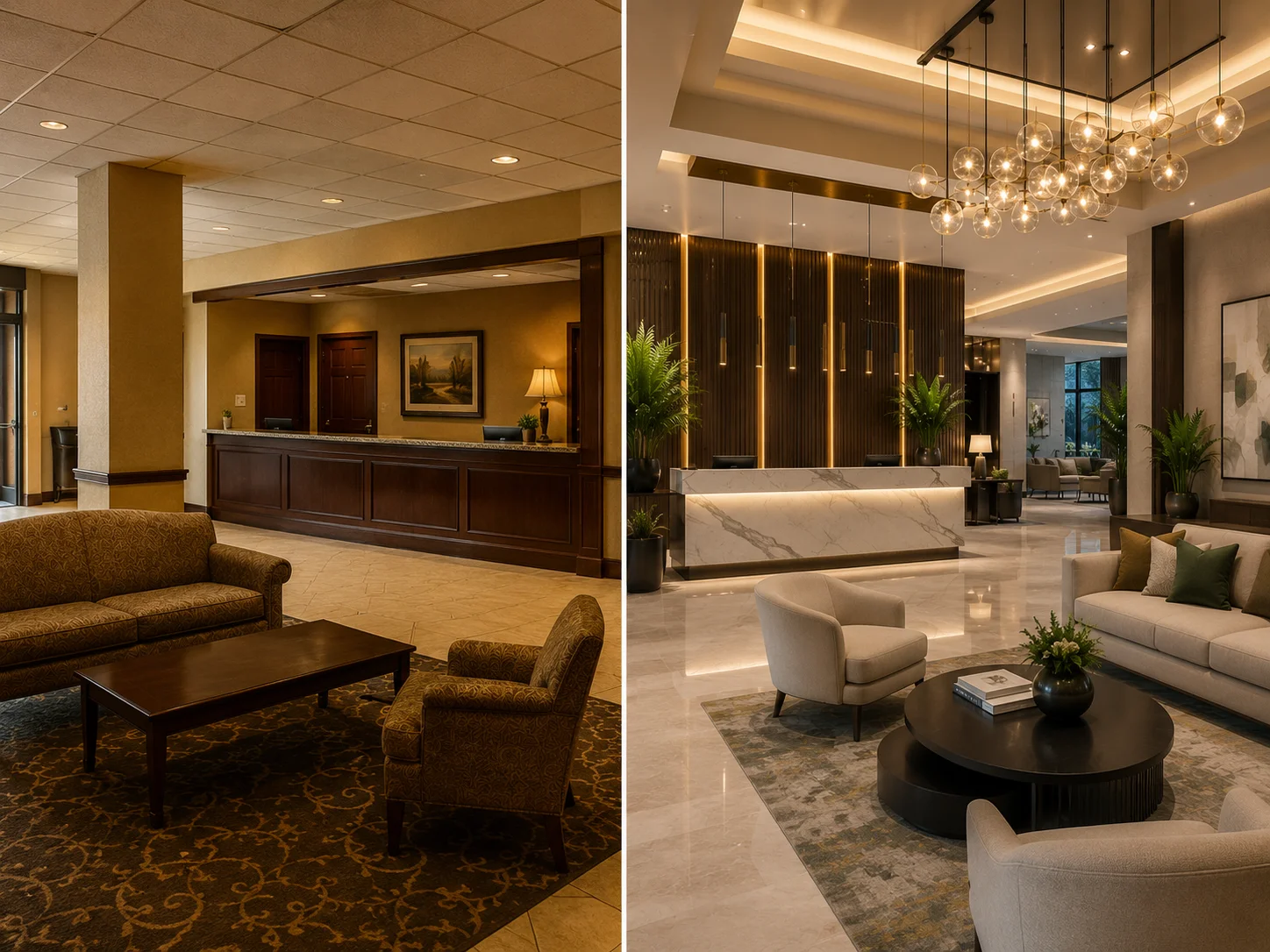
One thing worth flagging here. Hotels in major metros - New York, Los Angeles, Chicago, Miami - tend to run 20 to 40 percent higher than these national averages and sometimes more, driven almost entirely by elevated labor rates, union requirements and permitting processes that operate at a completely different scale than smaller markets. If your property sits in one of those cities, adjust your expectations upward from the start. Don't wait until the bids come in to discover that gap.
6 Key Factors That Drive Hotel Renovation Costs
Two hotels. Same segment. Same size. Renovating at the same time. Wildly different final budgets. This happens constantly and it almost always traces back to one or more of these six things.
1. Location of the Property
This one surprises people more than it probably should. A midscale hotel renovation that cost $180 per square foot in Tulsa could easily cost $260 in San Francisco - not because of different materials or different scope, but purely because of where the building sits. Labor rates vary dramatically across markets, permitting fees are in completely different ranges and in major metros the regulatory environment alone can add weeks to a project and thousands to a budget without a single brick being laid.
2. Age and Condition of the Building
Old buildings hide things. That's just the reality. Water damage behind the tile, mold inside the walls, electrical panels that haven't been touched since 1978, plumbing that's corroded past the point of any reasonable repair - none of it shows up until the walls come open and your contractor is standing there with a look on their face that tells you this just got more expensive. For any hotel built before 1990, a 15 to 20 percent contingency buffer isn't optional, it's something you should be factoring in before you ever sit down to write a budget, not after.
3. Hotel Category and Brand Standards
Economy hotels focus on durability and function. Clean, consistent, built to take a beating - that's the goal and the materials reflect that. Luxury hotels are a completely different conversation. Imported stone, custom millwork, bespoke FF&E, designer lighting - the cost multiplies several times over just from material selection alone, before a single hour of labor gets added. And if you're affiliated with a major flag like Marriott, Hilton, IHG, or Hyatt, your brand's Property Improvement Plan is going to tell you what materials are acceptable, what's not and when the work needs to be done - and that's additional cost pressure that your not going to fully control no matter how good your negotiating is.
4. Scope of the Renovation
Simple fact. A cosmetic refresh runs far less than a gut renovation. Paint, flooring, furniture, fixtures - that's one conversation. Complete plumbing and electrical replacement, structural modifications, new bathroom layouts, lobby redesign, ADA compliance upgrades - that's a completely different project. Each tier represents a major jump in both hotel renovation costs and timeline and the operators who get into trouble are usually the ones who start planning around cosmetic numbers and then discover mid-project that the scope is actually something much bigger.
5. Furniture, Fixtures & Equipment (FF&E)
FF&E is often the single largest line item in the whole budget. People underestimate this. Everything guests physically touch falls into this category - beds, headboards, nightstands, desks, lounge chairs, wardrobes, lamps, bathroom accessories, the artwork on the wall. Industry estimates put FF&E costs between $3,000 and $10,000 per guest room depending on quality level and FF&E typically represents 25 to 40 percent of the total hotel renovation budget on a full-scope project. The average cost of furnishing a hotel room adds up faster then most operators expect when they're staring at it line by line across a 100-room property.
6. Sustainability and Technology Upgrades
Smart operators are baking these upfront in 2026. LED lighting, smart thermostats, low-flow plumbing fixtures, EV charging stations, high-efficiency HVAC - all of it adds to the upfront hotel renovation budget, yes, but the long-term ROI on most of these is real and increasingly well-documented. LED lighting alone typically pays back within two to three years. Guests notice. Lenders notice. And increasingly, brand standards are starting to require some of this anyway.
Sample Budget: 100-Room Hotel Renovation
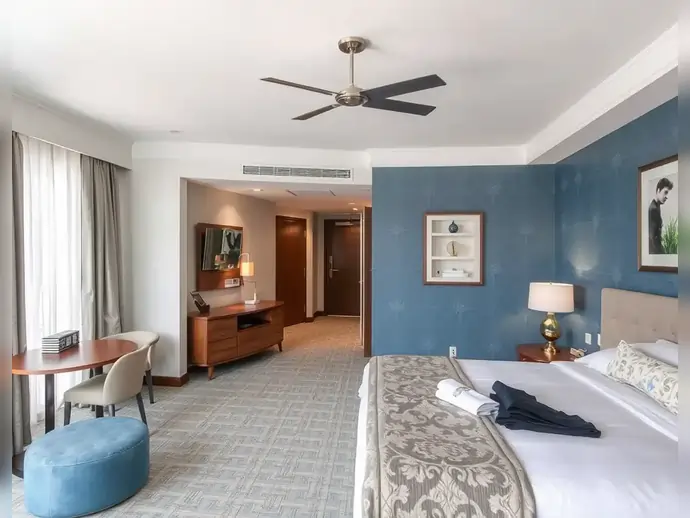
Here's a realistic breakdown of how a full renovation comes together for a 100-room midscale hotel in 2026. Your numbers will shift based on location, scope and what the building actually reveals once work begins - but this gives you an honest frame to start from.
|
Renovation Category |
Estimated Cost Range |
|
Guest Room Renovations |
$900,000 – $1,400,000 |
|
Lobby and Public Areas |
$200,000 – $400,000 |
|
FF&E (Furniture Replacement) |
$300,000 – $500,000 |
|
Exterior and Curb Appeal |
$100,000 – $250,000 |
|
Permits, Design & Soft Costs |
$50,000 – $150,000 |
|
Contingency (10–15%) |
$155,000 – $270,000 |
|
Estimated Total |
$1,705,000 – $2,970,000 |
That shakes out to $17,000 to $30,000 per room all-in for a midscale property when you include everything - and that's a number that lines up consistently with what operators across the country are actually spending, not what early-stage estimates told them they'd spend.
Hidden Hotel Renovation Costs You Need to Plan For
Every experienced developer in this industry has a story. A renovation that started clean and finished expensive. It happens because of hidden costs that weren't on anyone's radar during early planning and the same categories show up in those stories over and over again.
Structural and MEP surprises are the biggest one. Asbestos. Lead paint. Water-damaged subfloors. Outdated electrical panels wired in ways that haven't been code compliant in decades. Corroded plumbing that looks passable from the outside until someone actually opens the walls. None of it is visible during an initial walkthrough - and all of it has to be fixed, because code compliance doesn't give you the option to defer these things. That adds anywhere from $500 to $5,000 per room depending on what's found and how bad it actually is when it's exposed.
Permitting is underestimated almost every time. Particularly in major metro markets where inspections routinely surface ADA requirements, fire suppression upgrades and egress changes that weren't in anyone's original scope and that can't be argued away once a city inspector puts them in writing. Design and soft costs typically run 8 to 15 percent of hard construction and have a habit of not showing up in early estimates at all. And revenue loss from rooms out of service during the renovation is a real number that most operators don't think about until it's already too late to do much about it - which is exactly why smart phasing and scheduling decisions needs to be made at the planning stage, not as an afterthought once construction is underway.
Why Furniture Quality Matters in Hotel Renovations
Here's a mistake that gets made a lot. An operator sees the cost of commercial-grade hospitality furniture, compares it to residential furniture that honestly looks pretty similar on the showroom floor and decides to save money by going with the cheaper option. Makes sense at the moment. It doesn't work out that way two or three years down the road when those residential pieces start breaking down under the very different demands of a high-traffic hospitality environment - and the cost of replacing them early usually wipes out whatever savings were captured upfront and then some.
Commercial-grade furniture built for the hotel environment is engineered for thousands of sit-stand cycles, for high-frequency cleaning with commercial-strength products, for a consistent appearance across a 7 to 10 year life cycle and for fire resistance standards like California TB 117-2013 that most residential furniture simply isn't designed to meet. The average cost of furnishing a hotel room is higher with commercial-grade products - but when you look at total cost of ownership across a realistic renovation cycle rather than just the purchase price, the math isn't even close.
Hotel Renovation ROI: Is It Worth the Investment?
Yes. Done right, absolutely. But that "done right" part carries a lot of weight and it's where operators sometimes get into trouble - spending luxury-tier renovation money on a property in a market that simply can't support luxury-tier rates is a financial mistake that's more common than most people in this industry will admit openly.
Well-executed hotel renovations in 2026 consistently delivers real, measurable results. ADR increases of 10 to 25 percent post-renovation are fairly typical in competitive markets. Guest satisfaction scores improves, which compounds into better OTA rankings and review ratings over time. Brand flag compliance gets protected. Energy efficiency upgrades delivers ongoing cost reductions that keeps improving NOI well after the renovation debt is serviced. And lenders, for what its worth, want to see a post-renovation pro forma before they'll approve financing - so building one out with a hospitality consultant before committing to any scope isn't optional, it's an essential step that experienced operators treat as non-negotiable from day one.
Hotel Renovation Planning: A Quick Checklist
Getting this groundwork done before a single contractor conversation starts puts you in a fundamentally stronger position than most operators actually are when they walk into those early meetings.
- Property condition assessment (PCA) - document existing conditions before budgeting
- Brand PIP review - understand any franchisor requirements
- Scope definition - cosmetic, mid-range, or full gut
- Designer and architect selection - hospitality-specialized firms preferred
- Contractor pre-qualification - request hospitality-specific references
- FF&E procurement plan - lead times for custom furniture can be 12–20 weeks
- Phasing schedule - plan around occupancy calendar
- Contingency allocation - 10–20% depending on property age
- Financing structure - SBA loans, conventional renovation loans, or brand financing programs
Conclusion
Hotel renovation costs in 2026 doesn't follow a simple formula. A few thousand dollars per room for an economy refresh. Over $46,000 per room for a luxury overhaul. And a whole range of outcomes in between depending on what the building reveals, what the market demands and what the brand requires.
The operators who come out ahead consistently are the ones who do the groundwork - honest property condition assessment, realistic scope definition, early FF&E procurement planning and a contingency that actually reflects the real risk profile of the specific property. Use these benchmarks as your starting framework, not your final answer and build from there with eyes fully open to everything the numbers in this guide is telling you.
Looking for guidance on hospitality furniture for your next renovation? Sara Hospitality specializes in commercial-grade hotel furniture solutions built for durability and long-term value. Contact our team to learn more.