Choosing the Best Hotel Room Chair for Comfort, Style & Durability
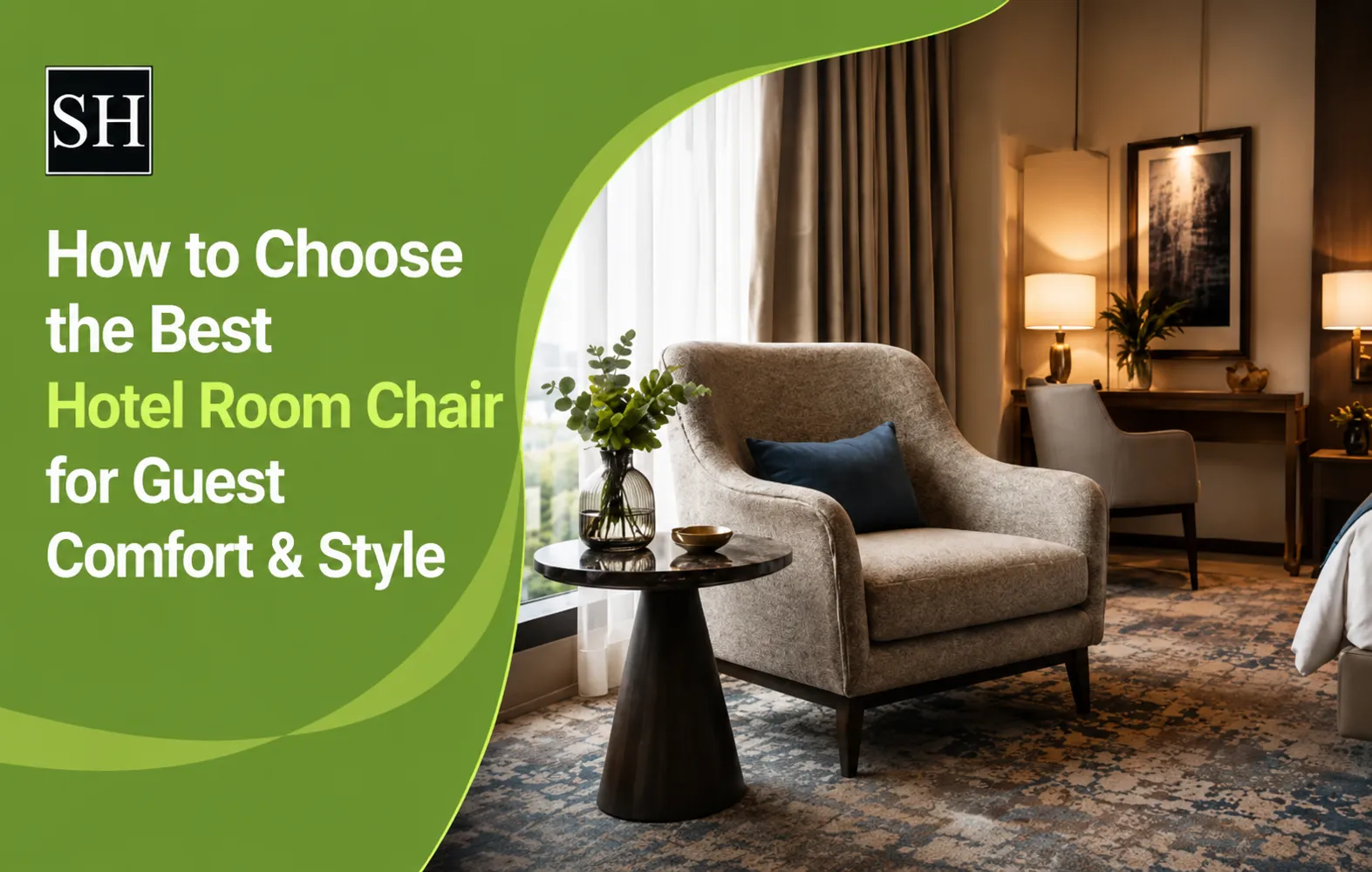
Choosing the best hotel room chair is about getting three things right at the same time, comfort, durability and design. To make sure your guests are happy and your rooms look great, focus on chairs that support the back properly, use fabrics that are easy to clean and hard to damage and have a shape that fits the overall look of the room.
Luxury hotel room chairs are not just about looks as they need to be comfortable enough to sit in for hours, strong enough to handle hundreds of guests a year, and good-looking enough to match the style of the room. That is a lot to ask of one piece of furniture, but the right chair does all of it.
Whether you are designing a boutique hotel, a full-service resort, or a select-service property, the chairs you choose for your guest rooms will directly affect how guests feel during their stay.
Why Every Hotel Room Needs the Right Chair
A lot of hotel owners spend most of their budget on the bed and treat seating as an afterthought. That is a mistake as guests do not just sleep in hotel rooms, they work, eat, relax, video call and spend real time sitting down. If there is no comfortable place to sit, they notice.
Here is why getting the chair right matters:
- Guests who are comfortable in their room give better reviews, plain and simple.
- A well-chosen chair ties the room's design together and makes it feel finished.
- Durable, well-built chairs last longer and cost less to replace over time.
- The right seating supports different guest needs, working, relaxing, reading, eating in-room.
- For branded properties, consistent furniture helps meet brand standards and pass audits.
The chair in a hotel room is one of the most used pieces of furniture in the space. Guests sit in it while getting ready, while eating breakfast, while watching TV, while sending emails. It earns its place every single day. Choosing it carefully is not an optional upgrade, it is a basic responsibility to the people staying in your property.
Types of Hotel Guest Room Chairs
Guest rooms are not one-size-fits-all spaces and neither are the chairs that go in them. Different chair types serve different purposes and understanding what each one does best helps you make smarter selections for your rooms.
Lounge Chairs
A lounge chair is the most relaxed type of seating you will find in a hotel guest room. It is designed for comfort above everything else, the kind of chair a guest sinks into after a long flight or a full day of meetings.
Lounge chairs are usually placed near a window, next to a small side table or at the foot of the bed. They are wide, cushioned and built for extended sitting and some also come with an ottoman to match, giving guests a place to put their feet up.
In a well-designed room, the lounge chair is where guests spend a lot of their quiet time, reading, watching TV or just unwinding. Because of this, it needs to be genuinely comfortable, not just comfortable-looking. The seat depth, back height, cushion firmness and armrest height all affect how the chair actually feels to sit in.
For hospitality use, lounge chairs also need to hold up as they will be used by guests of different sizes and weights, moved around by housekeeping and cleaned regularly. A lounge chair built for residential use simply will not last in a commercial hotel environment. You need one built specifically for hospitality, with a strong internal frame, high-resilience foam and upholstery rated for commercial use.
Accent Chairs
An accent chair is a piece that is as much about style as it is about function. It does not try to be the most comfortable seat in the room, it tries to be the most interesting one.
Accent chairs are often placed in corners, beside entry tables or used as a visual focal point in suites and larger rooms. They come in bolder shapes, more distinctive silhouettes and sometimes in materials or colors that stand out from the rest of the room's furnishings.
For hotel designers, the accent chair is one of the easiest tools for giving a room personality. A well-chosen accent chair can tell the design story of an entire property, whether that is a sleek, modern aesthetic, a warm and traditional feel or something in between. The leg finish, the fabric choice, the shape of the back, each decision adds a layer of character to the space.
From a practical standpoint, accent chairs still need to meet commercial durability standards. They may not be sat in as often as a lounge chair but they will still face regular use and need to maintain their appearance over time.
Desk Chairs
The desk chair used to be the most ignored piece of furniture in a hotel room. A basic task chair was considered good enough and most hotels treated it as a utility item rather than a design decision.
That has changed as remote work and bleisure travel, the blend of business and leisure, have made the desk chair one of the most important seats in the room. Guests today may spend four, five or six hours sitting at the desk in a single day. If the chair is uncomfortable, that guest is uncomfortable for most of their stay.
A good hotel desk chair needs to do a few things well, it needs to support the lower back properly so guests are not sore after a few hours of work. It needs to be the right height for the desk, not too low, not too high. It needs to be easy to adjust and it needs to look like it belongs in the room, not like it was borrowed from a break room.
The best hospitality desk chairs balance ergonomic performance with design quality. They come in finishes and upholstery options that coordinate with the rest of the room, so the chair feels like part of the space rather than an afterthought.
Armchairs
An armchair sits somewhere between a lounge chair and an accent chair. It is more structured and upright than a lounge chair, which makes it easier to get in and out of, a quality that guests genuinely appreciate. At the same time, it has enough presence and design character to contribute to the room's overall look.
Armchairs work especially well in smaller rooms where a full lounge chair would take up too much space. They offer a comfortable place to sit without dominating the floor plan. They are also a practical choice for rooms where the chair needs to pull double duty, comfortable enough for relaxing, upright enough for working or eating.
For senior living properties within the hospitality space, armchairs with the right seat height and firm cushioning are particularly important. Guests who have difficulty lowering themselves into deep, soft seating benefit greatly from a well-designed armchair that makes sitting down and standing up easier.
Upholstered Chairs
Upholstered chairs are defined by one thing above all else: the material that covers them. The fabric or leather is not just a surface detail, it is the central design decision that affects how the chair looks, how it feels to sit in, how easy it is to clean and how long it will last.
An upholstered chair done well is one of the richest-looking pieces of furniture you can put in a hotel room. A chair fully wrapped in a well-chosen performance fabric, whether that is a textured boucle, a deep velvet, a clean linen weave or a leather alternative, gives the room a sense of quality that guests respond to immediately.
What matters most in a hospitality context is that the upholstery is built for commercial use. The fabric needs to resist staining, hold its color under regular cleaning and maintain its appearance after being sat in repeatedly, day after day. Residential fabrics, even high-quality ones, are not designed for this kind of sustained use. Commercial-grade upholstery fabrics, rated to industry standards, are the only appropriate choice for hotel environments.
Key Features to Look for in a Hotel Room Chair
Buying a chair for a hotel is very different from buying one for your home. In a home, one person uses a chair gently and occasionally. In a hotel, that same chair might be used by 300 different guests in a year, guests of all shapes, sizes and habits. The chair has to be ready for all of them.
The most important features to evaluate before purchasing:
- Frame quality, a hardwood frame with proper joinery and corner reinforcement will outlast cheaper alternatives by years.
- Foam and cushion grade, commercial-grade foam holds its shape and comfort level far longer than standard residential foam.
- Fabric durability rating, look for a double-rub count of at least 100,000 and compliance with commercial textile standards.
- Cleanability, the covering must be compatible with the cleaning products your housekeeping team uses every day.
- Proper sizing, always verify that the chair's dimensions work within the actual room layout, not just on paper.
- Customization options, the ability to choose fabrics, finishes and silhouette details ensures the chair fits your design intent precisely.
Skipping any of these considerations in favor of a lower upfront cost almost always leads to earlier replacement and higher long-term spend. A well-specified chair is an investment that pays for itself over its operational life.
Best Materials for Hotel Room Chairs
The material a chair is made from determines how it looks, how it feels, how long it lasts and how easy it is to maintain. Choosing the right materials for your hospitality room chairs is one of the most important decisions in the entire process.
Here is a quick comparison to help frame the choices:
|
Material |
Durability |
Ease of Cleaning |
Best Suited For |
Design Flexibility |
|
Performance Fabric |
Very High |
Easy |
All property types |
Very High |
|
Genuine Leather |
High |
Moderate |
Luxury & boutique hotels |
Moderate |
|
Faux Leather / Vinyl |
Very High |
Very Easy |
High-traffic rooms |
Moderate |
|
Solid Hardwood Frame |
Very High |
Low maintenance |
All property types |
High |
|
Metal Frame |
Very High |
Very Low maintenance |
Modern / contemporary rooms |
Moderate |
Fabric Upholstery
Fabric is the most popular choice for hotel room chairs and for good reason. Modern performance fabrics used in hospitality are nothing like the fabrics you find on furniture in a home store. They are engineered specifically for commercial environments, which means they are built to handle heavy use, frequent cleaning and years of wear without showing it.
When people talk about fabric durability in a commercial setting, they use a measurement called the double-rub count. This number tells you how many times a fabric can be rubbed back and forth before it starts to break down. For residential use, 15,000 to 30,000 double rubs is considered good. For a hotel chair, you want a minimum of 100,000 and many of the best hospitality fabrics go well above that.
Beyond durability, fabric offers the widest range of design options of any upholstery material. You can find performance fabrics in virtually every color, texture and pattern imaginable, from clean, simple plains to rich textures like boucle, chenille and performance velvet. This makes fabric the go-to choice for designers who want both longevity and creative flexibility.
The other big advantage of fabric is comfort as it is soft to the touch, breathable and generally more pleasant to sit on for long periods than harder materials. For hotel rooms where guests may spend hours sitting, working, watching TV, eating, fabric-upholstered chairs simply feel better.
Leather and Faux Leather
Leather has a look and feel that is hard to replicate and it carries a sense of quality and permanence that communicates luxury immediately. A well-upholstered leather chair in a hotel room tells the guest that no corners were cut.
Genuine leather is durable and develops a natural character over time. With proper care, conditioning, careful cleaning, protection from sharp objects, a leather chair can look excellent for many years. The challenge in a hotel environment is that proper care requires consistent effort from housekeeping staff and genuine leather is more sensitive to moisture, spills and certain cleaning products than other materials.
For this reason, many hotels are moving toward high-quality faux leather and performance vinyl alternatives. These materials have improved enormously in recent years. The best options now closely replicate the look and feel of genuine leather while being significantly easier to clean, more resistant to staining and moisture and often more consistent in color and texture across large orders. For high-traffic guest rooms, faux leather is often the smarter practical choice, offering the aesthetic of leather without the maintenance demands.
Both genuine leather and quality faux leather work particularly well on accent pieces, armchairs and desk chairs, where a clean, tailored look is the goal.
Wood and Metal Frames
The frame of a chair is what everything else is built on and you can have the most beautiful fabric and the most comfortable cushion in the world but if the frame is weak, the chair will fail and usually sooner than you expect.
In hospitality, solid hardwood frames are the industry standard for upholstered seating. Hardwoods like maple, beech and poplar are strong, stable and able to accept a wide variety of finish options, stained, painted or natural. Kiln-dried hardwood is particularly important because the drying process removes moisture from the wood, which prevents warping and joint failure over time. A properly constructed hardwood frame with corner blocking, glued joints and reinforcing dowels will hold up under commercial use for many years.
Wood frames also offer excellent design flexibility. The exposed legs and base of a chair can be finished in dozens of stain colors and paint options, making it easy to coordinate precisely with the room's flooring, casegoods and overall palette.
Metal frames bring a different quality to a chair. They are extremely durable, low-maintenance and lend a cleaner, more contemporary look to the piece. Powder-coated metal is resistant to scratching and chipping and comes in a wide range of colors. Metal legs are particularly popular in modern and transitional design schemes where a lighter, more architectural look is the goal.
Many of the best hospitality chair designs combine both materials, a solid hardwood structural frame for strength, with metal leg details for a refined, contemporary finish. This combination delivers both the durability a commercial environment demands and the visual polish a well-designed hotel room requires.
How Hotel Room Chairs Improve Guest Satisfaction
There is a direct line between comfortable, well-designed seating and the reviews a hotel receives. Guests may not write "the lounge chair was perfectly constructed" in a review but they absolutely notice when they are uncomfortable and they absolutely feel the difference when a room has been thoughtfully put together.
Here is how the right seating creates measurable impact:
- Guests who feel comfortable during their stay give higher overall ratings, even when other factors are comparable to competing properties
- Well-maintained, attractive furniture contributes to the perception of cleanliness and care that drives positive feedback
- Consistent, durable seating reduces visible wear over time, keeping rooms looking fresh without constant refurbishment
- For business travelers, a proper desk chair directly affects their productivity and comfort, a significant factor in choosing where to book on future trips
- For branded properties, furniture that meets brand specifications supports stronger performance on official audit scores
On the operational side, furniture built to commercial standards simply costs less to own over time. It needs to be replaced less often, repaired less frequently and causes fewer disruptions to room availability. The upfront investment in quality commercial hotel chairs pays back steadily across the life of the asset, in lower replacement costs, stronger guest scores and a room that continues to look the way it was designed to look years after installation.
Final Thoughts
Choosing the right luxury hotel room chairs comes down to understanding three things, first what the chair needs to do, secondly, who it needs to serve and third, how long it needs to last.
The type of chair matters, a lounge chair, a desk chair and an accent chair each serve a different purpose and need to be selected with that purpose in mind. The materials matter, performance fabrics, quality frames and the right covering for each environment determine how the chair holds up and how much it costs to maintain and the construction quality matters more than almost anything else, because in a commercial hotel environment, a chair that fails early is not just an expense, it is a disruption to the guest experience.
At Sara Hospitality, we help owners and operators find the right seating solutions for every type of property and every kind of guest room. Whether you are outfitting a single boutique property or sourcing at scale across multiple locations, the right chair makes a difference that guests feel every single day.
- SOFT SEATING
- BATHROOM VANITY
- FIXTURE EQUIPMENT
- Hospitality Casegoods
- Hospitality outdoor furniture
- Senior Living Furniture
- Hotel reception desk
- High end contract furniture
- Premium Hotel Bedroom Furniture
- Custom commercial furniture
- Hospitality Furniture Manufacturers in Canada
- Leading Hotel Furniture Manufacturers in Canada
- Casegood manufacture canada
- Cultured Marble
- SPC Flooring
- Boutique Hotel Furniture
CATEGORIES