Guests rarely compliment the seating in a room, yet they complain immediately when a chair feels wrong. Somebody sits down with a laptop, shifts twice, then moves to the bed instead and that small moment quietly shapes the review. Hotel room chairs carry far more weight than most owners assume, because they influence comfort scores, photography and perceived value at every price point. A poorly chosen seat makes a beautifully finished room feel cheap, while the right one pulls the entire design together effortlessly.
This guide walks through the main styles available, the reasons they matter commercially and a practical method for choosing correctly. Everything here reflects patterns that repeat across boutique properties, business hotels and large resort portfolios worldwide.
Types of Hotel Room Chairs for Guest Rooms
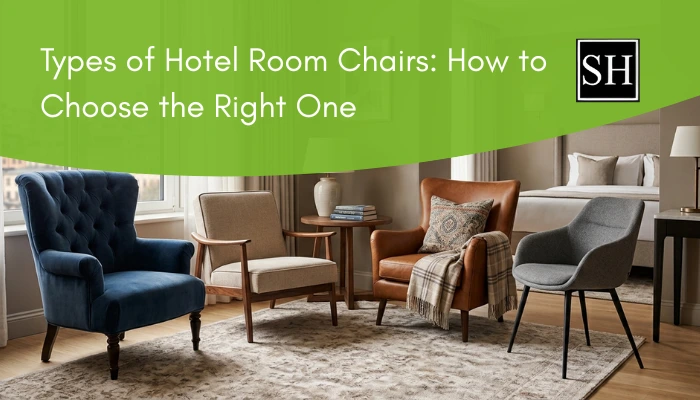
Understanding the categories saves enormous time during procurement, since each style solves a genuinely different problem inside the room. Most properties end up combining two or three formats rather than repeating one everywhere.
- Lounge and accent chairs create a relaxed corner and they photograph beautifully for booking platforms.
- Desk chairs support longer working sessions, which matters greatly for corporate and extended stay travellers.
- Armchairs with ottomans suit resorts, offering the leisure comfort that holiday guests genuinely expect.
- Slipper chairs work in compact rooms, delivering seating without consuming valuable floor area unnecessarily.
- Barrel and tub chairs balance comfort with a small footprint, making them reliably versatile choices.
- Bench seating near the window adds flexible capacity for couples and small families together.
The various types of hotel room chairs each carry different cost, durability and maintenance profiles worth comparing carefully.
Comparing Chair Styles Before You Commit
Specification decisions become far easier once you see the tradeoffs laid out side by side. The table below reflects realistic performance across typical occupancy conditions.
|
Chair Style |
Best Suited Property |
Typical Footprint |
Practical Strength |
|
Lounge chair |
Boutique and luxury hotels |
Medium to large |
Strong visual impact in photography and reviews |
|
Desk chair |
Business and airport hotels |
Compact |
Genuine ergonomic support during long working hours |
|
Armchair with ottoman |
Resorts and suites |
Large |
Deep relaxation that leisure guests actively remember |
|
Slipper chair |
Compact city rooms |
Small |
Useful seating without crowding limited floor space |
|
Tub chair |
Mid scale and upscale |
Medium |
Comfortable enclosure combined with easy cleaning access |
Match the style to your guest profile first, because that single decision resolves most later questions naturally.
Why Hotel Room Chairs Matter for Guest Comfort
Comfort influences behaviour and behaviour eventually influences revenue through repeat bookings and stronger direct reservations. A guest who settles comfortably into a chair stays longer in the room, ordering more from your menu.
Seat height around eighteen inches suits nearly every adult, while deeper lounge proportions suit leisure settings better. Firm high resiliency foam holds shape across thousands of sittings, whereas soft filling collapses within a single busy season. Armrests matter more than people realise, because they support standing, reading and holding a drink comfortably.
The right guest room chair also signals quality instantly, telling visitors that ownership pays attention to genuine detail. Housekeeping notices too, since well built seating cleans faster and survives the constant repositioning that daily service demands.
How to Choose the Right Hotel Room Chair
A clear sequence prevents the two expensive mistakes, which are buying purely on appearance or purely on price. Work through these stages before requesting any formal quotation from a manufacturer.
- Measure your smallest room first, then specify seating that works comfortably within those constraints.
- Define your dominant guest type, because business travellers and holidaymakers want genuinely different things.
- Test upholstery against your cleaning protocol, since chemicals destroy untested finishes surprisingly quickly.
- Confirm frame construction in writing, looking for hardwood joinery rather than stapled softwood assemblies.
- Check replacement fabric availability for several years, protecting your investment against accidental damage later.
- Order physical samples and let housekeeping handle them before anybody approves the final purchase order.
Properties following this process typically extend replacement cycles by several years and they avoid mismatched reordering headaches entirely.
Materials, Durability and Maintenance Realities
Material choice determines whether your seating still looks presentable after four busy years of continuous occupancy. Appearance sells the room initially, though construction quality protects your budget across the entire lifecycle.
- Kiln dried hardwood frames resist loosening and they tolerate repeated movement during daily housekeeping.
- Performance fabrics with high rub counts handle heavy use while still feeling pleasantly residential.
- Faux leather suits business properties, since it wipes clean quickly between consecutive guest arrivals.
- Powder coated metal legs resist scuffing far better than untreated wood in high traffic corridors.
- Removable, zippered cushion covers allow targeted replacement instead of retiring an otherwise sound chair.
Ask suppliers for double rub ratings and warranty terms separately, because bundled claims often obscure genuinely weak components.
Sara Hospitality: Hotel Chairs and Hotel Furniture Solutions
Sara Hospitality works with hotels, resorts and hospitality groups that need soft seating built specifically for commercial conditions. The team handles design, manufacturing and delivery together, which keeps quality consistent across large multi property rollouts.
- Custom sizing lets you fit seating precisely into unusual room layouts without awkward compromises.
- Fabric and finish selection matches your existing interior scheme, maintaining visual consistency throughout every floor.
- Contract grade construction meets commercial durability expectations rather than residential standards borrowed from retail furniture.
- Coordinated furniture packages cover beds, casegoods and seating, simplifying procurement for renovation projects considerably.
- Reorder support keeps future purchases identical, which protects brand standards across phased refurbishment programmes.
Choosing hotel chairs for guest rooms becomes far simpler when one partner handles specification, production and installation coordination together.
Practical Takeaways for Your Next Refurbishment
Begin with a single room type, testing your chosen seating properly before committing across the whole property. Guest feedback arrives quickly and it tells you more than any showroom visit ever could.
- Prioritise seat height, arm design and foam density above decorative styling considerations.
- Combine two complementary styles rather than repeating one identical chair everywhere unnecessarily.
- Budget for fabric refreshes separately, extending frame life well beyond the initial upholstery lifespan.
- Photograph sample rooms early, confirming the seating genuinely improves your online booking imagery.
Document your standards once and every subsequent purchase becomes noticeably faster while staying visually consistent throughout.
Conclusion
Seating rarely appears in a marketing headline, yet guests notice it constantly throughout their entire stay. The properties earning strong comfort scores aren't spending dramatically more money and they're simply choosing far more deliberately. When you evaluate hotel room chairs, judge them by an ordinary evening rather than a styled photograph. Sit in them yourself, ask housekeeping what frustrates them and insist on construction details before releasing any budget.
Start with one floor, measure the difference through reviews and direct feedback, then repeat what genuinely works. If you're planning a renovation or a new opening, speaking with an experienced hospitality furniture partner early saves considerable money later.