How to Convert an Independent Hotel Into a Franchise Brand
Independent hotel owners and investors across the United States are reassessing how to stay competitive in a market dominated by recognizable flags and powerful distribution platforms. For many, the decision to convert independent hotel to franchise is driven by pressure on RevPAR, evolving guest expectations and the need for stronger brand recognition with lenders and potential buyers.
Converting an independent property is more than signing a franchise agreement and changing signage. A successful hotel brand conversion process touches every part of the asset - from positioning and physical product to technology, training and long-term capital strategy. When structured correctly, independent hotel brand conversion can improve performance, enhance exit value and reduce risk for stakeholders.
The following guide outlines how to convert a hotel to a franchise brand in a disciplined, B2B-focused way, with a specific lens on U.S. owners and investors while also addressing the critical role of hospitality furniture in brand compliance—and how partners like Sara Hospitality can support a hotel conversion project from concept through execution.
Why Convert an Independent Hotel to a Franchise Brand?
Before initiating hotel rebranding to franchise, owners should build a clear business case. Converting for the wrong reasons or without measurable goals can dilute returns and complicate operations.
Strategic drivers for conversion
Common reasons to pursue independent hotel brand conversion include:
- Need for stronger direct and loyalty-driven demand
- Increasing competition from well-known flags in your market
- Pressure from lenders to align with a recognized brand to support refinancing
- Desire to stabilize ADR and occupancy through brand systems
- Objective to raise the asset’s profile for a future sale to institutional buyers
Potential advantages of a franchise affiliation
While every property is different, a well-executed hotel brand conversion process can provide:
- Access to a global reservations network and loyalty program
- Standardized guest experience that supports rate integrity
- Centralized marketing, sales and revenue management tools
- Established operating standards and training resources
- Improved lender and investor perception of the asset’s risk profile
To justify moving forward, define specific outcomes - such as targeted RevPAR index improvement, required ADR uplift, or desired increase in valuation - before committing capital to a hotel conversion project.
1. Evaluate Your Asset and Market Position
The first phase in any hotel brand conversion process is a realistic assessment of where the asset stands today and how it competes in its submarket.
Property-level assessment
Review the hotel’s physical condition, operations and commercial performance:
- Building age, structural condition and MEP systems
- Room mix, size and suitability for different brand tiers
- Public areas: lobby, F&B outlets, meeting rooms, fitness and pool
- Back-of-house efficiency and support areas
- Existing technology platforms (PMS, POS, CRS, channel manager)
This exercise will indicate how much capital will likely be needed for property improvements once you convert independent hotel to franchise.
Market and competitive analysis
Next, confirm whether a franchise flag can add incremental value in your location:
- Identify current competitive set - both independent and branded
- Benchmark occupancy, ADR and RevPAR versus key competitors
- Review the mix of brands and chain scales already present
- Look for gaps (e.g., limited upscale select-service, underrepresented extended-stay)
This analysis informs which brands are realistic candidates and whether the market can support the positioning you envision after hotel rebranding to franchise.
2. Define Franchise Strategy and Select the Right Brand
Not every property is a fit for every flag and misalignment can be costly. A disciplined approach to brand selection is essential.
Strategic considerations
When you plan to convert hotel to franchise brand, align your choice with:
- Location type (urban core, suburban, interstate, airport, resort)
- Physical layout and adaptability to brand design standards
- Target demand segments - corporate, leisure, group, extended stay
- Investment horizon and exit strategy for the asset
Questions to ask when evaluating brands
Owners and investors should challenge prospective franchisors on:
- Whether the chain scale and brand positioning match local demand and rate ceilings
- Required renovations and structural changes to meet brand guidelines
- The brand’s presence and saturation in the immediate and feeder markets
- Historical performance of comparable conversions in similar markets
Many U.S. owners engage specialist partners like Sara Hospitality USA to run side-by-side comparisons of franchise proposals, model fee structures and assess the long-term value impact of each independent hotel brand conversion option.
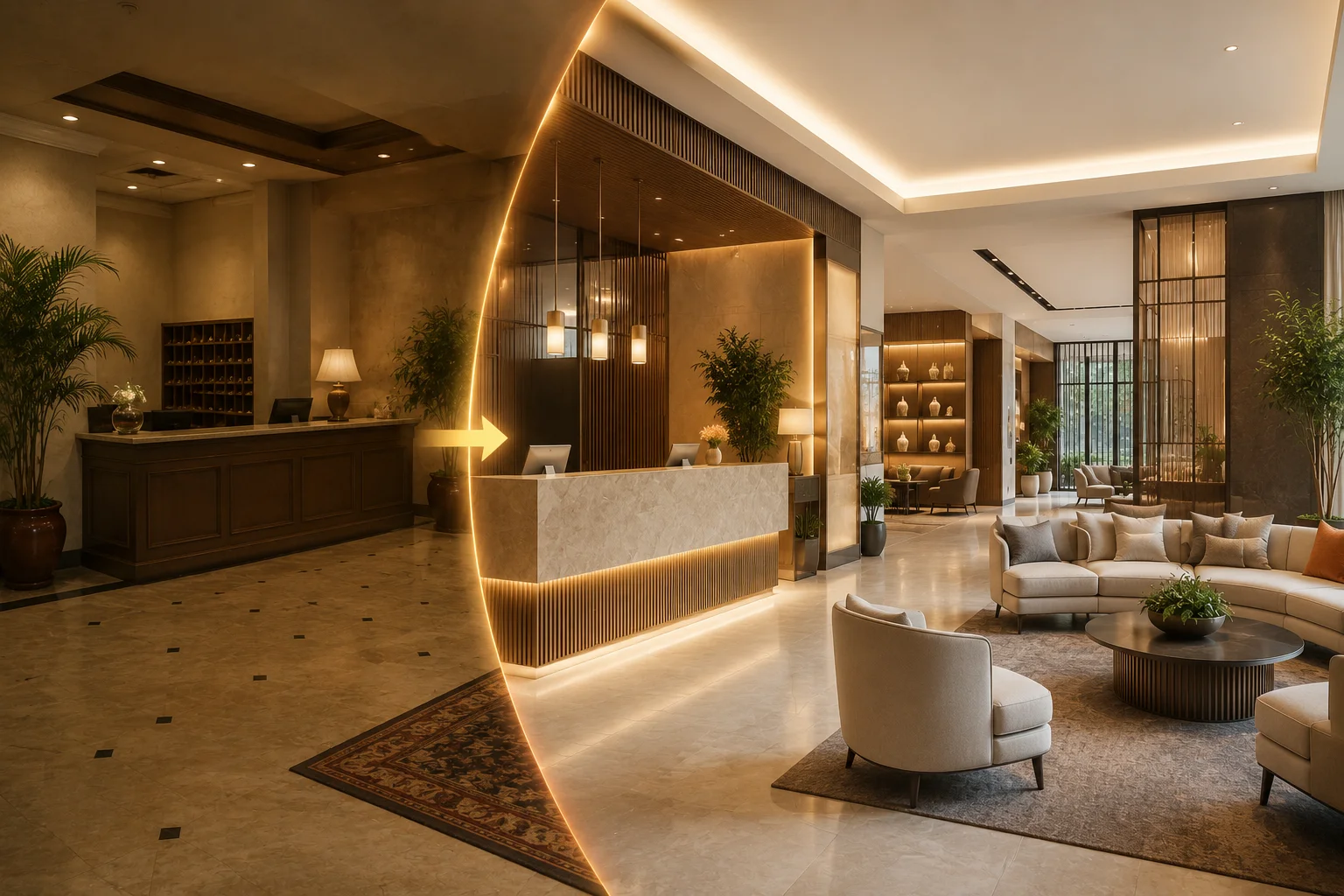
3. Understand Costs and Legal Framework of the Hotel Brand Conversion Process
After shortlisting brands, the formal hotel brand conversion process begins. This phase combines commercial negotiation with technical and design planning.
Key components of the process
Typical steps include:
- Submitting property and market data for brand evaluation
- Undergoing a franchisor-led market and feasibility review
- Negotiating franchise agreement terms and territorial protections
- Receiving and refining the Property Improvement Plan (PIP)
- Aligning on design concepts, timelines and procurement strategy
Major cost categories to model
To decide whether hotel rebranding to franchise is financially justified, model:
- Initial franchise and application fees
- Ongoing royalty, marketing and loyalty program fees
- PIP and capex requirements: guestrooms, corridors, façade, public spaces
- Technology upgrades: mandated PMS, CRS, revenue tools and integration
- Pre-conversion training, soft-opening costs and transition expenses

Build a detailed pro forma comparing a “stay independent” scenario to a “convert independent hotel to franchise” scenario, including expected payback period, impact on net operating income and effect on terminal value at sale.
4. Plan the Hotel Conversion Project as a Cross-Functional Initiative
A hotel conversion project is not a simple renovation. It is a coordinated effort that affects construction, branding, operations, technology and commercial strategy simultaneously.
Assemble the right team
Successful independent hotel brand conversion typically involves:
- Ownership and asset management
- General manager and key department heads
- Design and architecture partners
- Construction and procurement specialists
- Brand project and technical services representatives
- IT and systems integration support
Build a realistic, phased timeline
Your schedule should account for:
- Franchise agreement signing and PIP approval
- Design development and FF&E/OS&E procurement
- Phased construction with room-out-of-order planning
- System cutover milestones (PMS, CRS, distribution)
- Staff training and brand onboarding
- Official reflagging date and post-launch ramp-up
Owners should balance speed-to-market with revenue protection, often using floor-by-floor or wing-by-wing construction sequencing to minimize disruption.
5. Implement Physical Upgrades and Brand Standards
Once planning is complete, execution of the hotel conversion project becomes the focus. Here, the asset’s physical environment and guest journey are brought into alignment with brand expectations.
Property improvements
A typical PIP in a hotel rebranding to franchise scenario may include:
- Guestroom updates: casegoods, soft goods, flooring, lighting
- Bathroom upgrades: fixtures, surfaces and ventilation
- Corridor and wayfinding improvements
- Lobby reconfiguration, seating and design elements
- F&B or breakfast area re-concepting
- Exterior refresh: façade treatments, entry, signage and parking areas
The emphasis should be on changes that directly influence guest perception, rating potential and operational efficiency.
Brand standards and service alignment
Physical changes must be matched with service and operational adjustments:
- Adoption of brand service standards and SOPs
- New training modules for front office, housekeeping and F&B teams
- Implementation of brand-mandated amenities and in-room features
- Alignment of cleanliness, maintenance and safety protocols with brand expectations
This stage is where a well-structured hotel brand conversion process ensures that staff understand the new brand promise and consistently deliver on it.
6. Integrate Technology and Distribution Platforms
One of the most impactful aspects of independent hotel brand conversion is the transition to the franchisor’s technology and distribution ecosystem.
Core technology components
Key areas of focus include:
- PMS migration and integration with the brand’s CRS
- Alignment with brand websites, apps and booking engines
- Channel management rules, including rate parity and inventory controls
- Revenue management systems, reporting tools and BI dashboards
- Loyalty program integration and member recognition tools
Execution considerations
To protect revenue during the transition, plan for:
- Structured data migration from legacy systems
- Thorough staff training prior to going live
- A clear cutover plan or limited parallel run period
If managed correctly, the decision to convert hotel to franchise brand should result in improved demand generation from direct channels, better pricing control and more robust commercial analytics.
7. Relaunch Marketing and Revenue Strategy Under the New Flag
As the hotel conversion project nears completion, attention shifts to telling the market your story and capturing new demand.
Market-facing relaunch
Owners and operators should:
- Communicate the new brand affiliation to existing corporate and group accounts
- Update all digital assets, OTAs, GDS profiles and local listings
- Coordinate launch campaigns with the brand’s marketing, PR and sales teams
- Align local sales strategies with national and global segment initiatives
Revenue management and pricing
Under the new flag, recalibrate your commercial approach:
- Redefine your competitive set and pricing corridors
- Align BAR structure and discounting guidelines with brand policies
- Utilize brand revenue management tools and support teams to refine strategies
The objective is to accelerate post-conversion ramp-up so the benefits of hotel rebranding to franchise are visible in topline and bottom-line performance as early as possible.
8. Monitor Performance and Optimize Post-Conversion
Converting is not the finish line. Ongoing measurement and adjustment are critical to protect your investment.
Track the right metrics
Following independent hotel brand conversion, monitor:
- Occupancy, ADR, RevPAR and RevPAR Index versus comp set
- Channel mix and the share of bookings from brand direct channels
- Loyalty penetration and repeat guest contribution
- Guest satisfaction scores, online reviews and brand QA results
- Flow-through of incremental revenue to GOP and NOI
Continual optimization
Use data to refine:
- Staffing levels, service delivery and training needs
- Pricing, distribution and promotional strategies
- Ancillary revenue opportunities in F&B, meetings and parking
Regular reviews with your brand support team and external advisors help ensure the hotel brand conversion process continues to create value rather than simply add cost.
How Sara Hospitality USA Helps De-Risk Hotel Conversion Projects
For many U.S. hotel owners and investors, the complexity of a hotel conversion project makes specialized support essential. Missteps in brand choice, PIP scope, or execution can erode returns for years.
Sara Hospitality collaborates with ownership groups to:
- Evaluate whether and when to convert independent hotel to franchise
- Compare franchise proposals and model long-term financial impact
- Plan and execute PIPs with value-engineered design and procurement
- Coordinate technology, operations and training under new brand standards
- Support commercial strategy before, during and after hotel rebranding to franchise
By partnering with an experienced team, owners can navigate the hotel brand conversion process with greater confidence, align the asset with the right flag and position the property for sustainable performance and improved exit options.
Plan Your Hotel Upgrade with Ease
Let our hospitality experts guide you through your renovation and FF&E sourcing. Get a customized consultation that fits your property’s needs.
Book Your Consultation- SOFT SEATING
- BATHROOM VANITY
- FIXTURE EQUIPMENT
- Hospitality Casegoods
- Hospitality outdoor furniture
- Senior Living Furniture
- Hotel reception desk
- High end contract furniture
- Premium Hotel Bedroom Furniture
- Custom commercial furniture
- Hospitality Furniture Manufacturers in Canada
- Leading Hotel Furniture Manufacturers in Canada
- Casegood manufacture canada
- Cultured Marble
- SPC Flooring
- Boutique Hotel Furniture
CATEGORIES





FREQUENTLY ASKED QUESTIONS