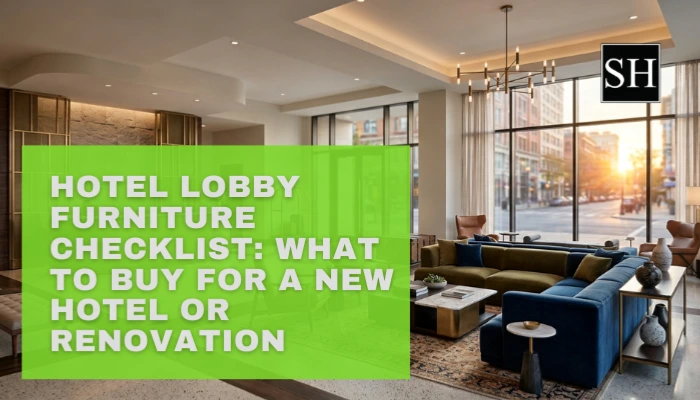
Hotel Lobby Furniture Checklist: What to Buy for a New Hotel or Renovation
Key Takeaways:
- A complete lobby checklist covers reception, seating, tables, workspace, storage and accessories.
- Hotel furniture should meet commercial durability and fire safety requirements.
- Smart space planning balances guest comfort, circulation, connectivity and revenue potential.
- Start procurement early, especially for custom reception desks and long-lead millwork.
Quick Answer: Essential hotel lobby furniture includes a reception desk, sofas, lounge chairs, tables, workspace furniture, luggage racks, storage, accessories and layered lighting. Hotels should also consider commercial durability, fire safety certification, circulation space and lead times when planning a new lobby or renovation.
A guest forms an opinion about your property within roughly eleven seconds of walking through the entrance. They register the seating, the lighting, and whether the space feels confident or slightly unfinished somehow. Working from a proper hotel lobby furniture checklist prevents the expensive scramble that happens when opening dates approach faster than deliveries. Owners usually remember the sofas and completely forget luggage racks, umbrella stands, and back panel millwork until installation week arrives.
This guide covers every category worth budgeting for, along with the durability standards, safety requirements, and layout decisions that experienced operators apply. Whether you're opening a new build or refreshing a tired lobby, the sequence below keeps procurement organised and genuinely predictable.
The Complete Hotel Lobby Furniture Checklist
Break your purchasing into five zones, because grouping by function prevents duplicate orders and forgotten accessories entirely. Each zone carries its own durability expectations, and each one gets specified separately during the tender process.
Reception and Front Office
Your front desk handles constant leaning, luggage knocks, and equipment weight across every hour of operation. Specify it first, since lead times here run considerably longer than seating due to custom millwork requirements.
- The hotel reception desk needs a durable stone or solid surface top resisting scratches.
- Reception back panels carry branding and lighting, so coordinate them with your signage supplier early.
- Back office cabinetry stores keys, stationery, and parcels, keeping the guest facing surfaces genuinely clear.
- Concierge and bell desks work best positioned slightly apart, preventing congestion during group arrivals.
Confirm cable management and power routing during drawings, because retrofitting outlets later damages finished joinery permanently.
Guest Seating Zones
Seating occupies the largest share of your budget, and it also drives the strongest first impressions. Mix formats deliberately rather than repeating identical pieces, since varied grouping encourages guests to linger comfortably.
- Lobby sofas anchor the main conversation area, seating three people without feeling crowded.
- Lounge and arm chairs create smaller clusters, supporting private conversations and solo laptop work.
- Waiting benches near the entrance handle group check ins, holding luggage and passengers efficiently.
- Ottomans and poufs add flexible overflow capacity, moving easily whenever the room configuration changes.
Well planned hotel lobby seating should let one guest sit privately while another group gathers nearby comfortably.
Tables and Surfaces
Surfaces determine whether guests actually use the seating you bought, because nobody balances coffee on their knees. Plan one usable surface within easy reach of every single seat throughout the space.
- Coffee tables suit sofa groupings, and heights around sixteen inches work for most seating.
- Side and end tables serve individual chairs, offering drink placement without crowding the walkway.
- Console tables behind sofas add display surface, hiding cables while supporting lamps and plants.
Any serious hotel furniture buying guide recommends heat resistant and moisture resistant tops here, since spills happen constantly throughout daily operation.
Workspace and Connectivity
Business travellers now treat lobbies as functional offices, and properties ignoring that behaviour lose valuable food revenue. Power access matters more than aesthetics for this particular zone during weekday occupancy periods.
- Work desks positioned near natural light attract guests handling longer working sessions comfortably.
- Task chairs require genuine ergonomic support, because guests sit for extended periods without complaining initially.
- Charging tables with integrated sockets and USB ports eliminate the untidy extension cables everywhere.
- Media counters and shared working benches accommodate small teams meeting informally before scheduled appointments.
Budget generously for power infrastructure, since electrical work costs far less before flooring gets installed permanently.
Storage and Accessories
Accessories get forgotten during budgeting, yet their absence makes an otherwise polished lobby feel incomplete. These smaller items also handle disproportionate daily wear compared with their modest purchase cost.
- Luggage racks and trolleys keep bags off upholstery, protecting fabric from wheels and grit.
- Umbrella stands near entrances prevent slippery floors during rainfall, reducing genuine liability exposure considerably.
- Waste bins should match your interior finish rather than looking like obvious afterthoughts later.
- Planters soften hard architecture, and mirrors visually expand narrower lobbies without structural changes.
- Layered lighting through floor and table lamps creates warmth that ceiling fixtures alone never achieve.
Order these alongside the main package, because separate small orders attract disproportionate freight charges unnecessarily.
Commercial Durability and Fire Safety Compliance for Hotel Lobby Furniture
Residential grade pieces fail within eighteen months under lobby traffic, and replacement costs quickly exceed the original savings. Commercial hotel furniture carries testing documentation, and you should request that paperwork before approving any purchase order.
- Upholstery needs a minimum of fifty thousand double rubs for genuinely high traffic areas.
- Frames should use kiln dried hardwood with corner blocking rather than stapled softwood construction.
- Fabrics require certification against relevant fire codes, typically California Technical Bulletin one seventeen.
- Foam must meet local flammability standards, and your supplier should provide the certificates directly.
- Finishes need testing against cleaning chemicals, since housekeeping uses disinfectants across every surface daily.
Keep these documents filed properly, because fire inspectors and insurers request them during licensing and renewal processes.
Hotel Lobby Space Planning and Furniture Budget ROI
Good planning earns money quietly, since comfortable guests order drinks, linger longer, and mention the atmosphere repeatedly. Allocate roughly eighteen to twenty five percent of your total renovation budget toward lobby furnishings realistically.
|
Category |
Typical Budget Share |
Replacement Cycle |
Revenue Impact |
|
Reception millwork |
Twenty five percent |
Ten years or longer |
Strong brand impression during arrival |
|
Seating |
Thirty five percent |
Six to eight years |
Directly drives dwell time and spending |
|
Tables and surfaces |
Fifteen percent |
Eight to ten years |
Supports food and beverage ordering |
|
Workspace furniture |
Fifteen percent |
Five to seven years |
Attracts weekday corporate travellers |
|
Accessories and lighting |
Ten percent |
Four to six years |
Improves photography and review scores |
A thoughtful hotel lobby layout keeps circulation paths at least four feet wide, and it positions seating away from doorway drafts.
Conclusion
Lobbies rarely appear in marketing headlines, yet they quietly decide whether guests feel genuinely welcomed or merely processed. The properties earning strong arrival scores aren't necessarily spending more, and they're simply buying against the correct priorities. Use this hotel lobby furniture checklist as your procurement backbone, ticking each zone before signing any supplier agreement. Test samples yourself, ask your front desk team what frustrates them daily, and demand certification paperwork upfront. If your opening date is approaching or your renovation drawings are finalised, begin conversations with an experienced hospitality furniture partner immediately. Long lead millwork drives the entire schedule, and starting early gives you options rather than expensive compromises later.
- SOFT SEATING
- BATHROOM VANITY
- FIXTURE EQUIPMENT
- Hospitality Casegoods
- Hospitality outdoor furniture
- Senior Living Furniture
- Hotel reception desk
- High end contract furniture
- Premium Hotel Bedroom Furniture
- Custom commercial furniture
- Hospitality Furniture Manufacturers in Canada
- Leading Hotel Furniture Manufacturers in Canada
- Casegood manufacture canada
- Cultured Marble
- SPC Flooring
- Boutique Hotel Furniture
CATEGORIES



FREQUENTLY ASKED QUESTIONS